Apple’s Product Ecosystem Strategy for Customer Loyalty
Why Apple’s ecosystem keeps people from drifting away
You’ve probably noticed it yourself: once someone has an iPhone, an Apple Watch slips onto their wrist, AirPods pop into their ears, and suddenly their laptop is a Mac. That’s not an accident. Apple has spent years weaving hardware, software, and services into a single fabric that feels seamless in daily life. It’s a strategy that turns individual products into a habit and habits are hard to break.
The scale helps. Apple disclosed that its active installed base surpassed 2.2 billion devices, a number that reflects not only reach but the gravitational pull of the ecosystem across generations of products (Apple Newsroom). When people add services like iCloud storage, Apple Music, or Fitness+, those devices become something more like a personal operating system. And the more “you” that lives inside Apple’s world (photos, messages, subscriptions) the tougher it is to switch.
How Apple designs loyalty into everyday moments
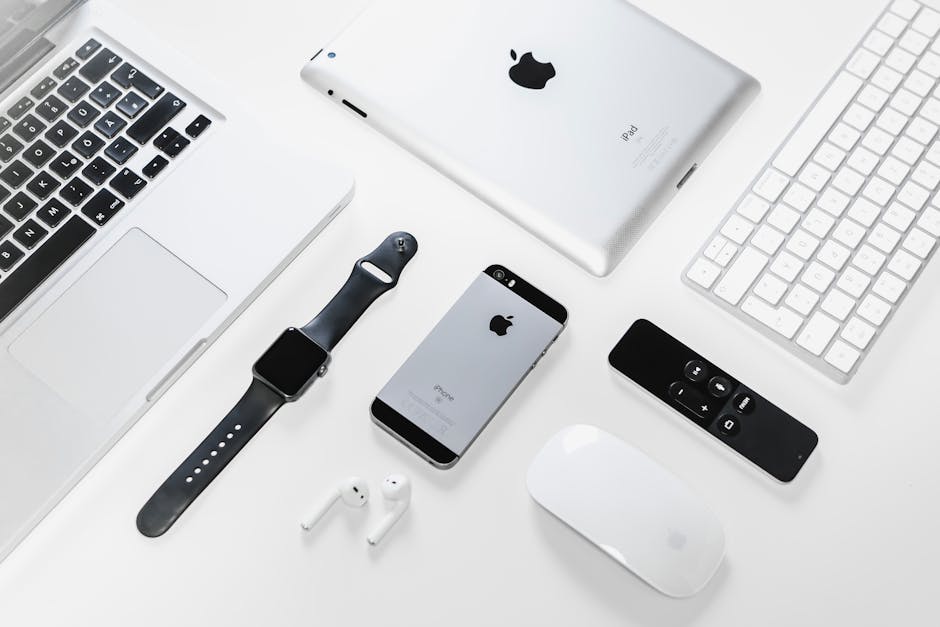
Think of Apple’s approach like a well-rehearsed relay team: each device hands off to the next without making you think about it. Features do the heavy lifting.
- Continuity and Handoff: Start an email on your iPhone, finish it on your Mac, answer a call on your iPad, or copy on one device and paste on another. This “just works” flow is documented in Apple’s continuity feature set and is the connective tissue across devices (Apple Support).
- iMessage and FaceTime: Blue bubbles aren’t just a cultural meme; they’re a network effect. Group chats, high-quality video, and end-to-end encryption create social gravity that nudges friends and families to stay within iOS. Analysts have repeatedly highlighted iMessage as a stickiness driver in the U.S. smartphone market (The Wall Street Journal).
- Services that compound value: iCloud Photos backs up memories automatically; Apple Music integrates with Siri and your car; Apple Pay and Wallet handle transit passes, keys, and tickets. Services revenue has become a financial engine, Apple reported all-time records in Services multiple quarters in FY2023–FY2024, underlining consumer adoption (Apple Investor Relations).
- Hardware synergy: AirPods pair instantly; Apple Watch unlocks your Mac and logs your fitness; HomePods hand off audio with a tap. Each interaction saves seconds, but together they save thought.
Those tiny frictions Apple removes (typing passwords, fiddling with Bluetooth, figuring out file transfers) add up to a feeling of effortlessness. That feeling is the product.
The economics of ecosystem lock-in
From a business angle, Apple’s ecosystem works like a flywheel. Devices bring people in. Services deepen engagement. Accessories add convenience. Over time, the customer relationship becomes less about one device and more about an integrated life platform.
Two numbers help explain the model:
- Retention and switchers: Independent trackers have consistently found that iPhone loyalty outpaces Android in core markets, with iOS retention in the 90% range in recent U.S. studies, evidence that users who get into Apple often stay there (Counterpoint Research).
- Services growth: Services reached a record trajectory, delivering high-margin revenue tied to subscriptions, payments, and cloud storage, not just device sales volatility (Apple Investor Relations).
On top of that, Apple leans on privacy as a differentiator. App Tracking Transparency and on-device processing for features like Face ID position Apple as a trusted custodian of personal data, which strengthens brand affinity and reduces appetite to switch, as covered by major outlets analyzing Apple’s privacy stance and its impact on the ad ecosystem (Financial Times).
The table below summarizes how key touchpoints quietly raise switching costs over time.
| Ecosystem Element | What It Delivers | Why It Builds Loyalty | Illustrative Source |
|---|---|---|---|
| iCloud (Photos, Drive, Keychain) | Auto backup, shared libraries, password sync | Personal data and memories are tightly integrated across devices | Apple Support |
| iMessage/FaceTime | Encrypted messaging and calling across devices | Network effects with friends/family and seamless continuity | The Wall Street Journal |
| Apple Watch + Health/Fitness | Biometrics, rings, Apple Fitness+ integration | Daily streaks and health data lock into Apple Health | Apple Newsroom |
| AirPods/Audio | Instant pairing, auto-switching, Spatial Audio | Frictionless usability tied to Apple chips and software | Apple Newsroom |
| Payments/Wallet | Apple Pay, transit, keys, passes | Habitual daily use and trust reinforce the platform | Apple Support |
| Services Revenue Engine | Subscriptions (Music, TV+, Arcade, iCloud+) | Recurring ties and bundled value (Apple One) | Apple Investor Relations |
There’s also a strategic moat in Apple’s custom silicon and software optimization. In-house chips (like the A-series and M-series) give Apple control over performance, battery life, and features that rely on tight hardware–software coupling. Reviewers and developers have noted this advantage repeatedly in benchmarks and app performance comparisons, creating a product feel that competitors can’t easily replicate (AnandTech).
Where the seams show: risks and regulatory pressure
No strategy is bulletproof. The very integration that builds loyalty can draw scrutiny. Regulators in the EU and elsewhere are probing how platforms manage app distribution, default settings, and cross-service preferences. Changes prompted by the EU’s Digital Markets Act are testing how open Apple must be to rival app stores and payment options (European Commission). The balance Apple seeks is to maintain security and user experience while complying with new rules, without unraveling the cohesiveness that customers value.
There are consumer pain points, too:
- Platform boundaries: Moving from iOS to Android can require tool-by-tool migration for photos, messages, and passwords. Apple provides a Move to iOS app on Android, but full parity and muscle memory take time (Apple Support).
- Service duplication: If your household mixes ecosystems, you might pay twice for overlapping services (music, storage), or sacrifice the best features to maintain cross-platform harmony.
- Lock-in psychology: Even when alternatives match features, people hesitate to leave because they’ve invested in accessories, apps, and workflows. This is classic switching-cost economics described in platform strategy literature (SSRN).
And yet, churn remains low. That suggests the value exceeds the friction, especially for users who lean heavily on cross-device continuity and privacy-centric defaults.
How to get the most from Apple’s ecosystem, without feeling trapped
If you’re all-in on Apple, lean into the features that save time daily. If you’re only partially in, you can still capture most of the benefits without overcommitting.
- Pick a “home base” device: If iPhone is central, consider which second device multiplies your payoff. For health tracking and notifications, it’s the Apple Watch; for creation and productivity, it’s the Mac.
- Consolidate identity and security: Use iCloud Keychain and passkeys to cut passwords and reduce lockouts. It’s one of the quietest but most life-changing parts of the stack (Apple Support).
- Bundle where it makes sense: If you already pay for Music and iCloud storage, price Apple One versus à la carte. Bundles can be cheaper while adding Arcade or TV+.
- Automate continuity: Turn on Handoff, Universal Clipboard, and Instant Hotspot across devices so common tasks become muscle memory.
- Stay portable where you can: Keep photos in high-resolution exports periodically, store critical files in open formats, and understand how to migrate messages. Enjoy the lock-in benefits without surrendering optionality.
One helpful mindset is to treat Apple’s ecosystem like a well-run transit system. If you plan your route (devices, services, backups) you’ll get speed and reliability. If you need to switch lines later, you can, as long as you keep a copy of your ticket (your data).
Ultimately, the reason Apple’s ecosystem inspires such loyalty isn’t mysterious. It’s the compound effect of thoughtful defaults, well-timed nudges, and polished handoffs, plus a growing lattice of services that feel native, not bolted on. The business results follow naturally: more devices in use, more services per user, and a brand reinforced each time something quietly works the way you hoped it would. And that’s the simple magic, turning a collection of gadgets into a daily companion you don’t have to think about, because it’s already thinking a few steps ahead for you.