A solar quote can look convincing when it compares a year’s panel output with a year’s electricity use. But producing 10,000 kilowatt-hours (kWh) doesn’t necessarily erase the cost of buying 10,000 kWh from the utility. Electricity you use as it’s generated may be worth the full retail rate; electricity you send to the grid may earn a smaller credit.
That distinction matters even more for homeowners pricing a new installation in 2026. The federal residential clean energy tax credit ended for systems whose installation was completed after December 31, 2025. An estimate that still subtracts 30% from the purchase price will make the payback period look much shorter than it is.
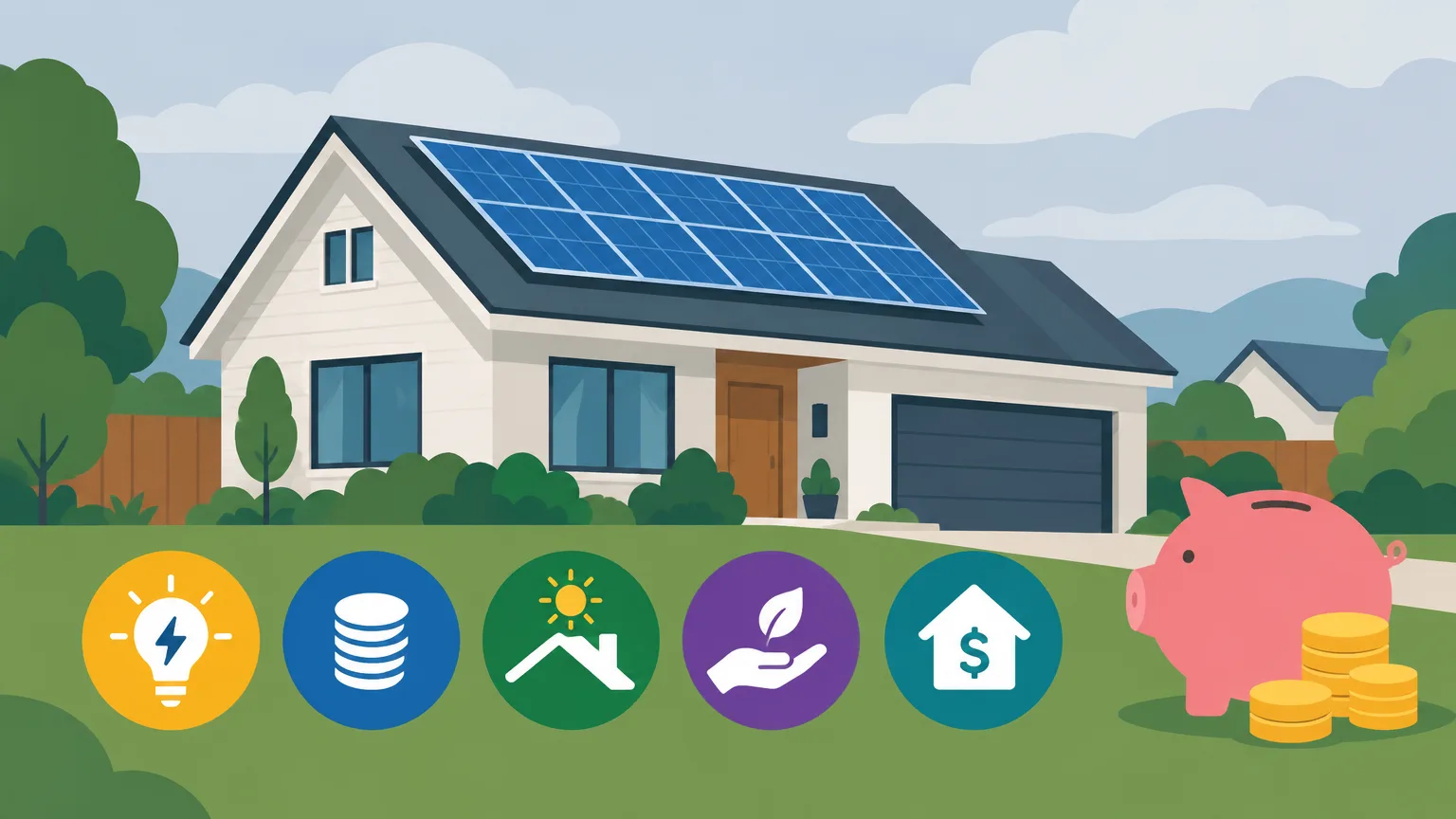
Rooftop solar can still be a good purchase. The useful question is narrower: What will this system cost you, how much of your utility bill will it actually displace, and how long will you own the home?
Start with the installed price, not the monthly payment
As a price reference, an 8-kilowatt (kW) system averaged about $20,960 before incentives in 2026 quotes on the EnergySage marketplace. That is a comparison point, not a price you should expect every installer to match. Roof complexity, local labor, electrical work and equipment choices can change the bid substantially. A battery adds another cost and should be priced separately.
Get at least three written proposals for the same approximate system size. Each should show the cash price, panel capacity in kW, estimated annual production in kWh, equipment, warranties and any work excluded from the price. Comparing only the advertised monthly payment hides differences in loan terms and installation cost.
If you need a roof replacement soon, settle that question before signing a solar contract. Removing and reinstalling panels for later roof work adds expense. If the roof would need replacement anyway, don’t automatically charge its entire cost to solar—but do count any extra cost caused by moving that work forward. A renovation is also an opportunity to consider green architecture choices for urban homes, including how roof space will be used.
Estimate how much electricity your roof can make
Add up 12 months of electricity use from your bills. Use kWh, not dollars: a high bill might reflect heavy use, a high rate, fixed charges or all three. Think about changes ahead, too. An electric vehicle or heat pump could raise your future demand, while insulation or more efficient equipment could lower it.
Then test the proposed system’s output against your actual roof. The National Renewable Energy Laboratory’s PVWatts calculator estimates annual and monthly solar production using location and system details. Treat its result as a check on the installer’s proposal, not a guarantee. An installer should account for shade, roof orientation, pitch and usable area when producing a site-specific estimate.
A south-facing roof is often favorable, but other orientations may still work. Roof condition and tree cover matter as much as a sunny ZIP code. If a proposal promises enough annual production to cover all your usage, ask where every panel will fit and how shade was modeled.
Don’t size a system solely to reach 100% of annual consumption. Extra output is less valuable where export credits are low, and some utility programs have size limits or other conditions. The best-sized system is the one with the strongest usable savings, not necessarily the biggest array that fits.
Turn production into bill savings
The key billing questions are how much solar power you’ll use immediately, what credit you’ll get for exports, and which charges you’ll keep paying. Net-metering and export rules depend on your state and utility, and the name of a program alone doesn’t tell you what each exported kWh is worth.
Ask your utility for the tariff that would apply to a new solar installation. Check the export credit, time-of-use rates, fixed monthly charges, minimum bills, credit rollover rules and any solar-specific fees. Your electric bill generally won’t disappear: you may still buy power when panels aren’t producing and pay charges that solar generation cannot offset. The Federal Trade Commission advises homeowners to separate electricity usage charges from fixed utility charges when judging potential savings.
Here’s a simplified comparison for an 8 kW system bought for $21,000. Suppose it produces 10,000 kWh a year. The household uses 6,000 kWh of that power as it’s generated and exports 4,000 kWh. Assume each kWh used on-site avoids a 22-cent utility charge.
| Export-credit arrangement | Annual value of solar electricity | Simple cash payback |
|---|---|---|
| Exports credited at 6 cents/kWh | $1,560 | About 13½ years |
| Exports credited at 22 cents/kWh, with all credits usable | $2,200 | About 9½ years |
The first calculation is 6,000 × $0.22, plus 4,000 × $0.06. Changing only the export credit cuts the estimated payback by roughly four years. These are illustrations, not offers from a utility. They leave out maintenance, changes in rates or production, financing and any applicable local incentive. The “all credits usable” assumption is especially important: bill credits can have rules that limit their value.
Subtract incentives you can actually receive
For a system installed in 2026, do not subtract the former federal homeowner credit. The IRS says paying for a system by December 31, 2025 does not preserve that credit if installation was completed later.
State, local and utility programs may still reduce your cost or pay for generation. The Database of State Incentives for Renewables & Efficiency lists programs and policies by location, but verify eligibility, funding and application deadlines with the agency or utility running each program before including it in your math. A rebate paid after installation is not the same as money available for your deposit. Credits tied to future production should be counted when earned, rather than subtracted from the purchase price.
For a cash purchase, your starting net cost is the installed cash price plus necessary related work, minus incentives you qualify for and expect to receive. Keep any uncertain incentive out of your main estimate and run it as a better-case scenario instead.
Calculate payback—and know what it leaves out
The basic calculation is:
Simple payback = net upfront cost ÷ expected annual bill savings
If a $21,000 system saves $1,560 a year and receives no incentive, simple payback is about 13½ years. That number helps compare quotes, but it isn’t a forecast of the exact year your investment turns profitable. Output can change over time; an inverter may need replacement; utility prices and export rules can change; and repairs cost money. A conservative estimate leaves some room for those costs rather than assuming every year looks like the first.
Also compare payback with how long you expect to stay. If you plan to sell well before the system pays for itself, don’t assume the buyer will reimburse every dollar you spent. Ask local real estate agents about comparable sales with owned solar, and keep resale value separate from projected electricity savings. Those two benefits are easy to count twice.
For a closer comparison, project year-by-year bill savings and expenses over the period you expect to own the home. Run at least two cases: one using the installer’s expected production and one with lower production or less favorable export credits. If solar works only under an optimistic assumption about rising utility rates, the case for buying is weak.
Compare cash, loans and leases on total cost
Paying cash makes the purchase price and payback easiest to understand. A loan spreads the expense out, but interest and financing fees increase what you pay. Request both a cash quote and a financed quote for the same equipment. Compare the loan principal, annual percentage rate, payment schedule, total of payments and any payoff charge.
In particular, ask why the loan amount is higher than the cash price if it is. The Consumer Financial Protection Bureau has documented solar loans with dealer fees built into the principal. A low advertised interest rate is little comfort if it comes with a large price markup. For a loan, compare your expected utility savings with loan payments year by year; don’t divide the cash price by annual savings and call that your financed payback.
A lease or power purchase agreement (PPA) works differently. You pay to use a company-owned system or buy its output rather than purchasing the panels yourself. Compare expected utility savings against lease or PPA payments, including any annual price increases. Read the terms for maintenance, roof repairs, contract transfer and what happens if you sell the house. There is no homeowner purchase price to “pay back” in the same way; the test is whether the arrangement leaves you better off over its full term.
A battery deserves its own calculation. It may help you use more solar power later in the day or keep selected loads running during an outage when installed with suitable backup equipment. But solar panels alone generally do not provide home backup during a grid outage. If backup power is the goal, decide what that protection is worth to you; don’t assume battery bill savings will cover its added cost.
When to buy—and when to look elsewhere
Rooftop solar has a stronger financial case when the roof is sound and relatively unshaded, your electricity costs are high, the installed price is competitive, and you expect to stay long enough to benefit. It can still work with modest export credits if you use a substantial share of production at home.
Pause if the roof needs major work, the quote relies on a nonexistent tax credit, or the projected savings assume every solar kWh earns the full retail rate without showing the utility rules. Be wary of a salesperson who won’t provide a cash price or presses you to sign before you can check the numbers. The FTC warns against “free solar” claims and promises that panels will eliminate every electric bill.
If your roof is unsuitable—or you don’t own it—community solar may offer another way to participate. It is one of several renewable energy options for urban neighborhoods that don’t depend on fitting panels to every home. Check the subscription’s savings terms and cancellation rules just as carefully as you would a rooftop contract.
The practical next step is to put three written quotes beside a year of electric bills and your utility’s solar tariff. Calculate savings using the actual export credit, then compare each system’s net cost and financing terms. If the purchase still pays back within the time you expect to own the home under cautious assumptions, solar is worth serious consideration.