A gas appliance can be connected properly, have no noticeable gas leak and still expose a household to carbon monoxide. The danger often starts after the fuel reaches the burner: combustion goes wrong, exhaust escapes from a damaged vent, or a flue stops carrying gases outdoors.
That’s why gas-leak precautions are only part of the picture. If you smell gas, leave and follow the steps for responding to a suspected gas leak. But don’t wait for a smell to warn you about carbon monoxide. CO has no odor, and a working gas supply doesn’t prove that an appliance is burning or venting safely.
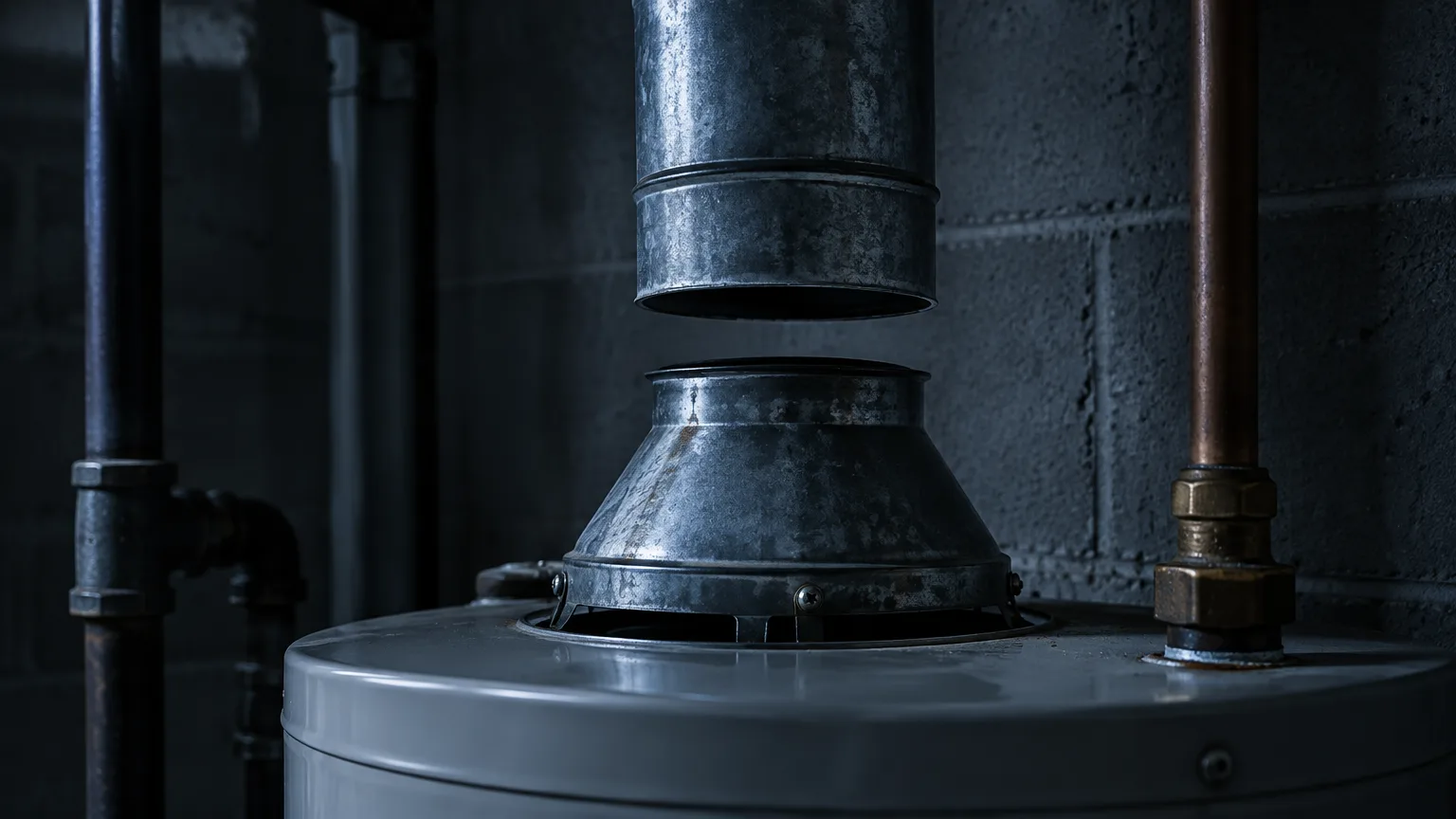
How gas appliances can put carbon monoxide into a home
Carbon monoxide, or CO, forms when fuels such as natural gas or propane don’t burn completely. Furnaces, boilers, water heaters, ranges, ovens, dryers and gas fireplaces can all be involved. The problem isn’t limited to an appliance producing unusually high amounts of CO: even combustion gases from a working appliance can become dangerous indoors if they aren’t carried away as intended.
A vented furnace or water heater needs both air for combustion and a clear path for exhaust. A blocked chimney, loose vent connection, malfunctioning burner or damaged component can defeat that arrangement. Some older appliances draw their combustion air from the room around them and rely on a natural upward draft to move exhaust through a flue. If air begins moving the other way, the appliance can spill combustion gases back into the house.
That reversal is called backdrafting. It can happen when a house loses air faster than outdoor air replaces it. A powerful kitchen hood, bathroom fans or a clothes dryer may contribute; wind and leaky heating ducts can matter too. Imagine a naturally vented water heater in a basement while several exhaust fans run upstairs. If the pressure around the heater drops enough, its flue may no longer draw reliably upward. The risk depends on the house and equipment, which is why a qualified professional should test suspected venting problems rather than guess from the appearance of the vent.
Gas cooking needs its own attention. A range doesn’t have a furnace-style flue, so combustion products can enter the kitchen during normal use. An outdoor-venting range hood helps remove them; a hood that only recirculates air does not exhaust them outdoors. A hood should not, however, be treated as a fix for a faulty burner or as a reason to use an oven to heat the house.
Warning signs worth acting on
CO exposure can cause headache, dizziness, weakness, nausea, vomiting, chest pain and confusion. People often describe the early symptoms as flu-like. An especially concerning pattern is several people feeling ill at home, or symptoms easing after they leave. Severe exposure can cause loss of consciousness; someone who is asleep may not wake up in time to recognize a problem. Infants, older adults and people with heart disease, anemia or breathing problems are more likely to become ill.
Physical clues can also justify an appliance inspection. Look for soot around equipment, debris falling from a chimney or appliance, rust or water streaks on a vent, or a vent connection that appears loose or disconnected. These are clues, not a home diagnostic test. Internal damage, poor burner adjustment and hidden chimney blockages may leave nothing obvious to see. Conversely, a clean-looking appliance is not proof that the air is safe.
Don’t use the absence of an alarm to dismiss symptoms. A CO alarm is an essential warning device, but its test button checks that its circuitry responds; it doesn’t certify the appliance or establish that every possible exposure has been ruled out. If CO poisoning seems possible, act on the symptoms even when no alarm is sounding.
What to do if an alarm sounds or someone may be ill
Get everyone outside into fresh air immediately. From outside, call 911 or the fire department and say that you suspect carbon monoxide. Don’t stay inside to find the source, reset the alarm and carry on, or reenter until emergency responders say it’s safe. If anyone has symptoms, seek prompt medical attention and tell the clinician about the possible CO exposure.
Once the immediate danger has been handled, don’t use an appliance identified as the source until trained personnel have repaired or serviced it. The cause also needs to be checked, not merely the alarm silenced: a technician may need to inspect the appliance, its venting and other fuel-burning equipment.
Prevention means maintaining the whole exhaust path
The strongest routine defense is a qualified inspection before trouble is apparent. Have the heating system, water heater and other fuel-burning appliances serviced every year. Ask the technician to check operation and venting, including the flue or chimney where applicable; a service visit focused only on getting the burner to light misses the problem if exhaust can spill indoors. Chimneys need regular checks because debris can block them.
Homeowners can keep accessible outdoor exhaust openings clear of snow and debris and report visible damage, but should not dismantle a vent or adjust a burner to troubleshoot CO. Don’t block an appliance’s combustion-air openings, and don’t use a gas oven, range or dryer as a space heater. Portable camp stoves and fuel-fired grills don’t belong indoors. Opening a window is not a substitute for properly operating equipment and venting.
Efficiency work deserves a safety check as well. Sealing leaks can change how air moves through a house; in some situations, it can cause an appliance such as a naturally vented water heater to backdraft. If you’re planning to seal drafts and address home energy waste, tell the contractor about every fuel-burning appliance and ask for combustion-safety testing as part of the work. ENERGY STAR advises identifying combustion hazards before air sealing and testing fuel-burning equipment in an attic after sealing there.
CO alarms provide a second line of defense
Install CO alarms on every level of the home and outside each separate sleeping area. Follow the alarm maker’s placement instructions and any local requirements; don’t assume an outlet beside the furnace or a spot directly above the range is the best location. Battery-operated alarms or alarms with battery backup can keep providing protection during a power outage. Interconnected alarms add a useful advantage: when one sounds, they all sound.
Test alarms monthly and replace them when their instructions or end-of-life signal call for it. Learn the difference between an alarm signal and a low-battery or end-of-life chirp, but never assume a sounding alarm is harmless without following its instructions. Smoke alarms and CO alarms serve different purposes; a smoke-only alarm won’t warn you about carbon monoxide.
A sensible plan has three parts: appliances and vents inspected, CO alarms maintained, and everyone in the household ready to leave if an alarm sounds or symptoms suggest exposure. None replaces the others.