A rotten-egg smell near a gas stove might seem like something to check before calling for help. Don’t. A suspected gas leak is a reason to get out first and investigate later. Gas can collect indoors, and a flame or spark may ignite it. Even a faint odor deserves the same response: leave, get clear of the area, then report it.
If you smell gas now, take everyone outside immediately. Don’t use your phone until you’re well away from the building and the odor. From a safe location, call 911 or your gas utility’s emergency number. If there’s a fire, an injury, or a strong sound of escaping gas, call 911 first. The American Gas Association’s gas-leak guidance is direct on the order: leave the area, avoid sparks, and call from somewhere away from the leak.
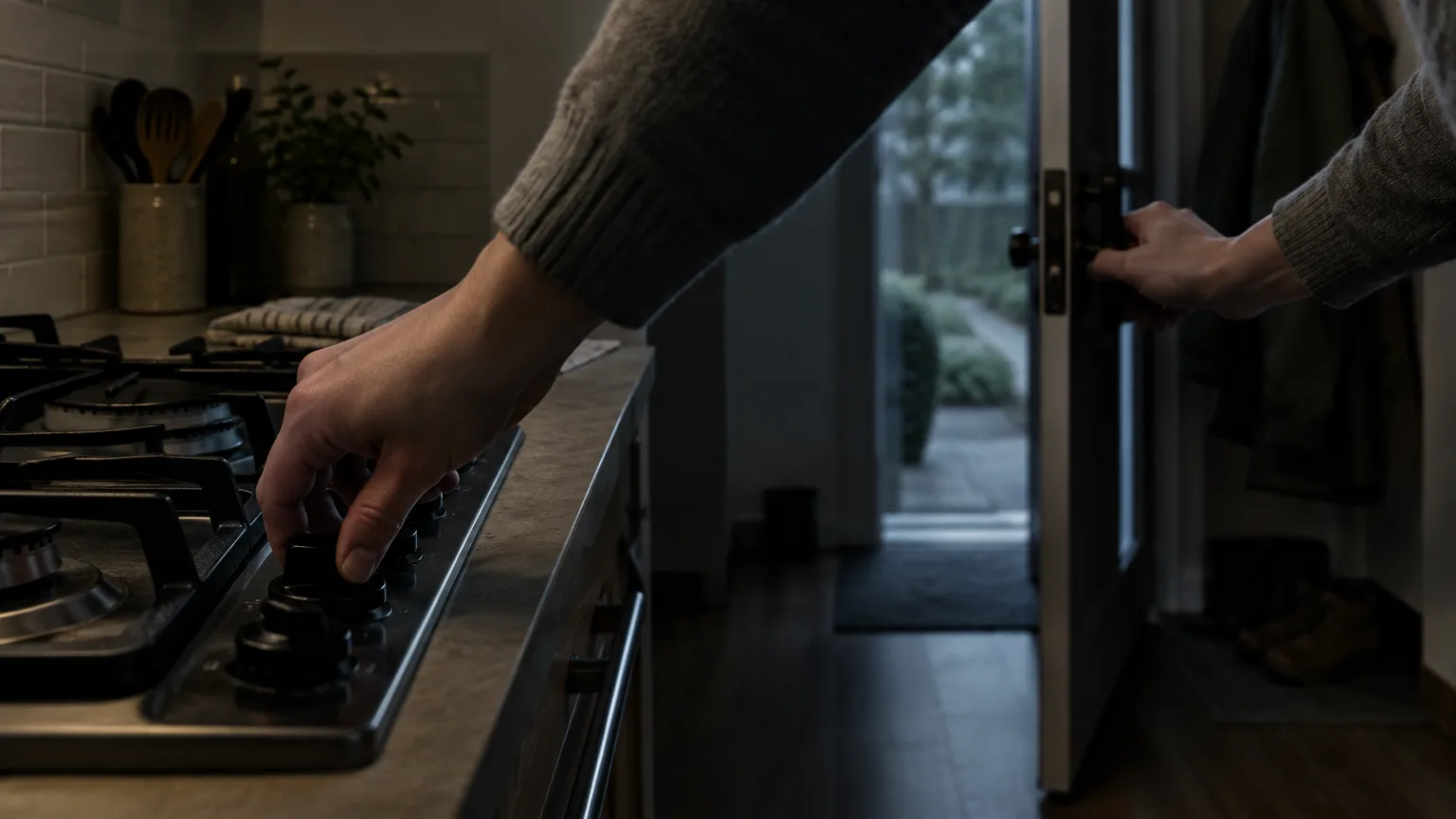
1. Leave immediately, taking others with you
Tell anyone nearby to leave and use the nearest safe exit. Take children and anyone who needs help, but don’t delay to gather bags, find pets that are hiding, or look for the source. If you’re in an apartment building, move away from the affected area and tell the dispatcher where you noticed the smell. Warn neighbors if you can do so without entering a hazardous area or delaying your own exit; don’t ring a doorbell near the odor.
Once outside, keep going. A porch, attached garage, or spot beside the gas meter may still be too close. Move well away from the building and any place where you smell gas. If the odor is outdoors, leave that area too. PG&E advises people who suspect a leak to move away to an upwind location when possible.
Don’t go back for a phone, keys, or someone else’s belongings. Tell 911 if you believe anyone remains inside and let responders handle the situation.
2. Avoid flames, switches, and anything that could spark
The safest exit is the simplest one: walk out without operating equipment. While you’re in or near the suspected leak area:
- Don’t smoke or vape, light a match or candle, or use a lighter.
- Don’t turn lights, appliances, fans, or thermostats on or off. Don’t unplug anything.
- Don’t use a landline or cell phone, flashlight, garage-door opener, or doorbell.
- Don’t start a car or other motorized equipment near the leak.
These precautions apply even if you aren’t sure the smell is gas. Con Edison’s gas-safety guidance warns that operating switches, electronics, and appliances can produce sparks. Leave them as they are and focus on getting out.
Don’t stay inside to open windows or try to air out the house. Guidance on windows differs among providers; National Grid tells customers to leave windows and doors as they are. You’ll need to use a door to exit, of course, but don’t spend time moving around the home to ventilate it. Don’t search for a leaking pipe or try to fix a fitting. A gas utility can check the area with the proper equipment.
Should you turn off the gas?
Not if doing so would slow your escape or take you toward the suspected leak. Don’t go looking for a valve inside the house.
Some gas providers give customers instructions for shutting off a meter when there are signs of a leak and it is safe to do so. That is not a reason to approach a meter in an area that smells strongly of gas, guess which valve serves your apartment, or delay your call. If you’ve already shut off the gas, don’t turn it back on yourself. A utility representative or qualified professional should check the system before service is restored.
3. Call from a safe location
Use your cell phone once you’re well away from the odor, or use a phone in a location away from the suspected leak. Call 911 or the emergency number for the company that supplies your natural gas. You do not need to prove there’s a leak before reporting one.
Call 911 first if there’s fire, a possible injury, a damaged gas line, or any other immediate danger. If you don’t know which company supplies the gas, call 911 rather than going back inside to find a bill. Some utilities ask customers to call both 911 and the utility; others direct them to the utility’s emergency line for a suspected leak and 911 for a more severe incident. For example, SoCalGas directs customers to report a suspected leak from a safe location and to call 911 promptly when damage from a leak may endanger people or property.
Give the dispatcher or utility the address, where you noticed the smell, whether anyone may still be inside, and any sounds or damage you observed before leaving. Say if you smell gas outdoors as well. Follow their instructions about where to wait, and don’t assume someone else has already reported it.
If your home uses a propane tank rather than piped natural gas, call your propane supplier from a safe location, or call 911 or the fire department. The Propane Education & Research Council’s leak guidance also says to leave immediately and stay away until a responder, supplier, or qualified professional says it’s safe. Only consider turning off the tank valve if you know how and can do so safely; never approach a tank you suspect is leaking.
4. Stay out until responders say you can return
The smell fading outside—or disappearing from the doorway—doesn’t establish that the building is safe. Stay away while the utility or emergency responders assess the area. Don’t restart equipment, relight an appliance, or turn gas service back on to see if the problem is fixed.
If the leak involves equipment or piping that needs repair, the utility may make the site safe but require a qualified contractor to complete the work before service is restored. For instance, Con Edison explains that it may shut off gas when a problem involves privately owned equipment until the necessary repair is made. If you rent, tell your landlord or building manager after you’ve reported the emergency; their involvement doesn’t replace a call to 911 or the gas supplier.
Return only when the utility or emergency responders tell you it’s safe. If they identify a repair or inspection that must happen before you use an appliance, follow that direction even if the building is cleared for entry.
What if you’re not certain it’s gas?
Odorized natural gas often smells like rotten eggs or sulfur, but smell is not the only warning. Hissing or roaring near a gas appliance or pipe can be a sign. Outdoors, warning signs can include blowing dirt, bubbles in standing water, or an unexplained patch of dead vegetation. Don’t move closer to confirm what you’ve noticed. Leave and report the concern.
Nor does a lack of odor rule out a leak. The National Institute for Occupational Safety and Health explains that gas odorant can fade under some conditions. If you have another reason to suspect escaping gas, use the same leave-and-call steps.
A carbon monoxide alarm is a different emergency signal. Carbon monoxide has no smell; fuel-burning appliances can produce it if something goes wrong. If the alarm sounds or people have symptoms such as headache, dizziness, nausea, or confusion, get everyone into fresh air and call 911. The CDC describes carbon monoxide as an odorless gas that can cause sudden illness. Don’t treat a rotten-egg smell as a carbon monoxide warning—or a silent carbon monoxide alarm as proof that a gas smell is harmless.
For a suspected gas leak, there’s no benefit in waiting to see if the smell comes back or trying to identify the appliance responsible. Get clear of the area and make the call from there.
Disclaimer
This article provides general safety information. Follow instructions from your gas supplier and emergency responders for the situation at your location.