Sustainable Agriculture Practices for a Growing Population
Feeding more people with less land, less water, and a tighter carbon budget is the defining test for agriculture. Global food demand is projected to rise sharply by mid-century, with estimates pointing to a 50% or greater increase compared with 2010 levels, driven by population growth and dietary shifts. Food systems already account for a large share of greenhouse gas emissions and use about 70% of freshwater withdrawals, so expanding production the old way risks crossing environmental limits and worsening climate impacts. The only workable route is to produce more from current farmland, cut losses, and restore degraded resources while keeping farmers profitable.
Most of the tools we need exist today. They combine better agronomy with targeted technology and smarter incentives. The practical question is what works, where, and at what cost. Evidence from international agencies, university trials, and farmer networks gives a clear picture: practices that rebuild soils, use water precisely, reduce wasted inputs, and diversify fields tend to raise resilience and stabilize yields. The sections below focus on approaches with strong data behind them, and where adoption is accelerating for good reason.
Why sustainable intensification matters now
Food production must grow without a matching rise in land conversion. Forest and grassland losses drive emissions and biodiversity decline, while climate change is already cutting yields during heat and drought years. The Intergovernmental Panel on Climate Change estimates that agriculture, forestry, and other land use contribute roughly a fifth to a quarter of global greenhouse gas emissions when including land clearing and soil carbon losses. Cutting that footprint while raising output means shifting from input-heavy expansion to “more crop per drop and gram of nutrient.” According to the Food and Agriculture Organization, irrigated agriculture uses the majority share of global freshwater withdrawals, so efficiency gains in fields ripple through entire watersheds. These constraints make the case for sustainable intensification: maintain or increase yields on existing land with practices that protect soils, conserve water, and manage nutrients with precision. Agencies and researchers now benchmark progress not only by yield, but also by emissions per kilogram of product, soil organic carbon trends, and water productivity. Readers can find baseline figures and methodology in FAO’s resources at fao.org and the IPCC assessment reports at ipcc.ch.
Soil health and carbon-smart farming
Healthy soils buffer droughts, suppress some pests, and store carbon. Cover crops, reduced tillage, and organic amendments are the backbone. Long-term trials show that cover crops can raise soil organic carbon by measurable amounts within a few years while improving aggregate stability and infiltration. Meta-analyses published by leading journals and summarized by extension services report gains in carbon on the order of tenths of a ton per hectare per year, though outcomes vary with climate, species mix, and management. I’ve walked Midwestern fields in late winter where a rye cover left the ground firm enough to carry equipment, while a neighboring bare field rutted. That kind of field observation matches the data: better structure keeps machinery on schedule and reduces compaction.
Reduced or strip tillage protects soil biota and moisture, but farmers worry about early season weeds and cool soils. The most successful transitions pair lower tillage with covers, starter fertilizer placement, and planter upgrades that handle residue. Compost or manure additions can jump-start biological activity, though nutrient accounting must be tight to avoid runoff. Credible guidance on soil testing and amendment rates is available through the United States Department of Agriculture and land-grant universities, with broad materials hosted at usda.gov. For growers selling into low-carbon markets, third-party protocols now credit soil carbon gains, but verification requires consistent sampling and conservative baselines. Careful recordkeeping pays off.
Water-smart production under scarcity
Water stress is the yield killer that leaves little room for error. Precision irrigation, improved scheduling, and soil moisture monitoring can push more production from each unit of water. Drip systems in horticulture and high-value row crops often cut water use by 30–50% compared with flood or furrow while stabilizing yields, supported by case studies from extension services and irrigation associations. Where capital for drip is a barrier, well-tuned sprinkler systems combined with evapotranspiration forecasts and tensiometers achieve meaningful savings. The World Resources Institute has compiled basin-level water risk maps that can help growers and buyers prioritize investments in high-stress regions at wri.org.
Paddy rice methane is a major emissions source, and changes in water management are one of the best levers available. Alternate wetting and drying (AWD) reduces methane by interrupting the anaerobic conditions that drive it, often by 30–70% with minimal yield penalty when managed correctly. Adoption depends on reliable water control and farmer training. In smallholder settings, laser leveling and simple field water tubes make AWD more feasible. Drought-tolerant and submergence-tolerant rice varieties from international breeding programs add resilience against erratic rainfall. In dryland cereals, deficit irrigation at critical growth stages protects yield more than equal amounts spread thin across the season. These are practical choices that manage risk year to year, not just long-term ideals.
Smarter nutrients and lower emissions
Nitrogen drives yield, yet it also drives nitrous oxide emissions and nitrate losses when mismanaged. The 4R framework (right source, rate, time, and place) cuts losses without sacrificing output. Split applications, in-season sensing, and stabilized fertilizers with nitrification or urease inhibitors consistently reduce emissions intensity in trials. Variable-rate technology guided by soil zones or imagery saves fertilizer where yield potential is low and supports it where it is high. Research groups and farm advisers report double wins: lower input costs and tighter protein specs in grains. Institutions like nature.com regularly publish peer-reviewed analyses on these strategies, and many are now embedded in national nutrient stewardship programs.
Livestock and rice account for a large share of agricultural methane. Feed additives such as 3-nitrooxypropanol (3-NOP) have cut enteric methane from dairy cows by around 20–30% in controlled studies, with commercial use expanding in regions that approve it. Trials with red seaweed (Asparagopsis) show higher reductions in some settings, though supply chains and long-term performance remain under evaluation. Manure management through covered lagoons and anaerobic digesters captures biogas for energy while lowering methane; project data in North America and Europe show strong methane cuts that are now credited in several carbon programs. These approaches are not silver bullets, but they stack with improved genetics, herd health, and reproductive efficiency to reduce emissions per liter of milk or kilogram of meat.
Diversification, resilience, and cutting waste
Monocultures simplify operations but can magnify risk. Diversified rotations, intercropping, and agroforestry spread weather and price shocks while supporting beneficial insects and soil life. Agroforestry systems sequester carbon both above and below ground and buffer microclimates, which is why they feature prominently in climate-smart agriculture portfolios from international research centers like cgiar.org. On mixed farms I’ve visited in the tropics, shade trees in cacao and coffee plots reduced heat stress during hot spells and kept soil moisture up, cutting irrigation needs. In grain systems, adding a legume year or relay cropping a cover for forage diversifies revenue and provides biological nitrogen, trimming synthetic fertilizer needs the following season.
Food loss and waste carry a massive hidden footprint. Roughly a third of food produced is lost or wasted along the chain, with losses concentrated post-harvest in low-income regions and at retail and household level in high-income regions. Priority actions differ by context. Hermetic storage and solar or high-efficiency grain dryers reduce mold and insect damage for smallholders. Cold-chain investments, better packhouse standards, and data-sharing on demand signals thin waste for perishables. Retail changes such as dynamic pricing close to sell-by dates and standardized date labels have cut store-level waste where adopted. Households can make a surprising dent by meal planning and using freezers more strategically. United Nations Environment Programme reports offer benchmarking and practical guides at unep.org.
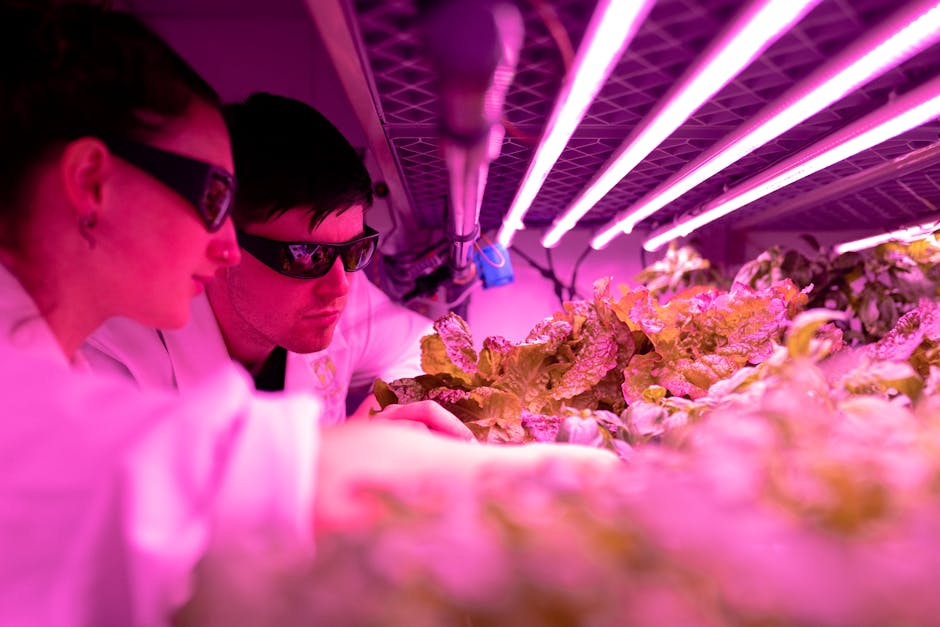
Urban and peri-urban agriculture will not feed entire cities, but it reduces pressure on logistics for leafy greens and herbs and creates living labs for circularity. Greenhouse and vertical systems linked to renewable power and recirculating water can deliver high output per square meter with minimal pesticides. Their economics hinge on energy prices and market proximity, yet when paired with district heat or onsite solar, the numbers improve. City procurement policies that favor seasonal, low-waste supply chains nudge both urban farms and rural suppliers toward better practices.
Policy and finance turn pilots into norms. Crop insurance that rewards risk-reducing practices like cover crops, equipment loans for precision tools, and carbon or water markets with strong measurement and verification draw in producers who need predictable returns. Transparency matters. Buyers setting Scope 3 targets are starting to co-invest with growers to cut emissions intensity in specific supply sheds, with results tracked through independently reviewed models and on-farm data. Public research and extension keep the playing field fair by sharing methods, not just outcomes.
Feeding more people well while restoring land and staying within climate limits is not abstract. It is a series of practical decisions field by field: keep living roots in the soil, apply every unit of water and nutrient where and when it counts, diversify to spread risk, and measure what matters. The sciencealigns with what many farmers already see on the ground: these practices raise resilience and keep options open. The challenge now is scaling what works, region by region, with policies and markets that share risk and reward across the chain.