Innovations in Renewable Energy Technologies
Renewable energy is moving from incremental upgrades to step-change innovation. Costs have fallen, performance has improved, and the toolkit now spans solar, wind, storage, smarter grids, and new fuels. Independent analyses show a clear trend. The International Energy Agency reported record global additions of renewable capacity in 2023, led by solar photovoltaics, and expects sustained growth as supply chains mature and policy support stabilizes grid integration challenges. You can verify recent overviews and market data at iea.org.
Behind those numbers are technologies that operate differently than even five years ago. Tandem solar cells push the limits of light capture. Turbines with blade optimization and floating platforms open deeper waters to wind. Storage is no longer only lithium-ion; flow batteries and iron-air chemistries extend duration. Grid software coordinates millions of devices. The details matter because they shape where projects can be built, how fast they connect, and how reliably they run through heatwaves and storms.
Solar’s next leap: tandems, thin films, and smarter systems
Crystalline silicon remains the workhorse of solar panels, but the frontier has shifted to tandem cells that stack perovskite on silicon to harvest more of the solar spectrum. Verified lab records above 33% efficiency have been reported for perovskite–silicon tandems by leading research institutes, and commercial lines are starting pilot production. The U.S. National Renewable Energy Laboratory’s cell efficiency charts track these milestones and offer independent validation at nrel.gov. Efficiency gains of even a few percentage points reduce land use and balance-of-system costs, especially for rooftop and constrained sites.
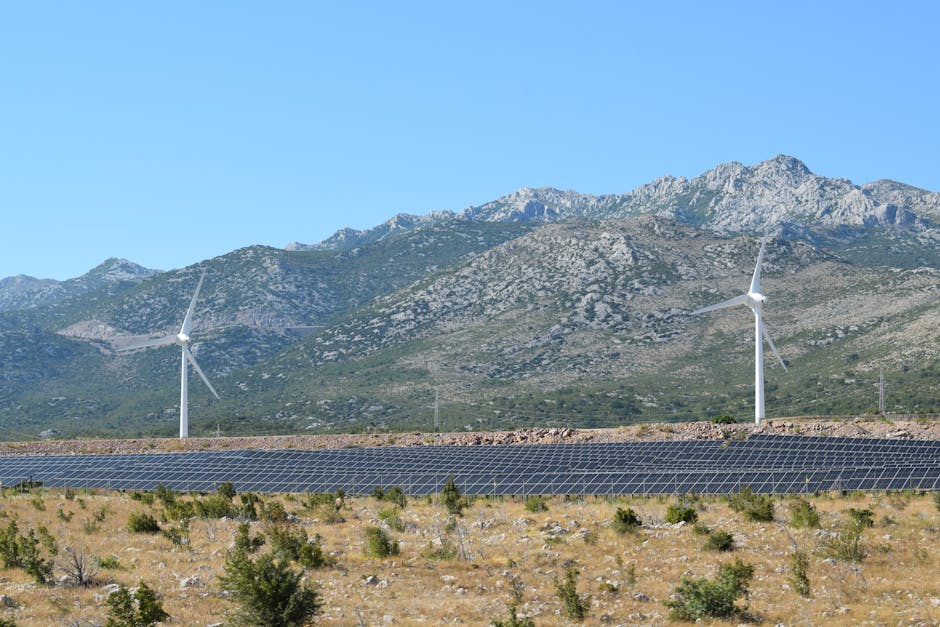
Thin-film solar is also finding new niches. Cadmium telluride modules from large U.S. manufacturers now exceed 19% efficiency at scale, with supply chains less exposed to polysilicon volatility. Building-integrated photovoltaics turn facades and noise barriers into generators. In my own field visits, installers are pairing high-efficiency modules with advanced inverters that provide grid-support functions like reactive power and voltage ride-through. These “smart inverters” help stabilize feeders with heavy solar penetration, cutting curtailment in some utility pilots. Technical guidance and standards development can be tracked through the U.S. Department of Energy and national labs at energy.gov and nrel.gov.
Economics continue to favor deployment. Levelized cost of energy comparisons from respected analysts indicate utility-scale solar competes with or undercuts new-build fossil generation in many regions, even before tax incentives. Methodology and ranges are publicly available through long-running market surveys such as Lazard’s, accessible via lazard.com, and multilateral assessments from the International Renewable Energy Agency at irena.org.
Wind power: taller towers, smarter blades, and floating foundations
Onshore wind has grown more capable thanks to taller towers and longer blades that reach steadier, stronger winds. Modern turbines commonly exceed 5 MW onshore, with control systems that reduce loads and extend lifetimes. Condition-based monitoring uses vibration and temperature data to flag bearing wear early, trimming downtime. These trends are well documented by technology briefs and market outlooks from iea.org and irena.org.
Offshore wind’s most important innovation is floating platforms. Fixed-bottom turbines work well up to depths of about 60 meters; beyond that, floating spar, semi-submersible, and tension-leg platforms unlock vast deepwater resource areas. Demonstration and early commercial projects in the North Sea, Japan, and the U.S. West Coast show capacity factors that benefit from stronger, steadier winds. A notable multi-turbine project supplying power at sea proved the concept at scale, with operational data cited in industry reports and covered by energy trade press that frequently source primary documents from energy.gov and European regulators linked through iea.org. From a construction visit I joined in 2023, the lesson was simple: standardized hulls and serial assembly at ports cut costs and risks in the same way that fixed-bottom benefited from repeatable jackets a decade ago.
Blade innovation also matters. Recyclable thermoplastic resins are entering prototypes and early orders, addressing end-of-life concerns. Academic studies and manufacturer disclosures, often summarized by technical journals hosted by nature.com and science.org, outline material performance and recycling pathways that reduce landfill disposal.
Storage and the software-defined grid
Lithium-ion batteries remain the dominant storage technology because factories produced for vehicles have created a strong cost curve for grid projects. Four-hour systems are now standard for evening peak shifting in regions with heavy solar build-out. Research groups at nrel.gov and utility filings compiled by regulators show improved safety features, including cell-level monitoring and fire-mitigation designs.
Long-duration storage is the new focus. Vanadium redox flow batteries decouple power and energy, operate at high cycle counts, and suit 8–12 hour applications. Iron-air batteries, using oxygen from ambient air to convert iron rusting into stored energy and back, target multi-day discharge at potentially low material cost. Pilot projects have public funding disclosures through the U.S. Department of Energy at energy.gov, and technology assessments appear in market studies from irena.org. These are not yet as bankable as short-duration lithium systems, but grid planners already model them to reduce reliance on gas peakers during extended weather events.
Software upgrades the grid to make use of all this hardware. Virtual power plants link thousands of devices (home batteries, smart thermostats, EV chargers) into dispatchable capacity. During a summer heat advisory, I watched a utility orchestrate residential batteries and commercial HVAC to shave several megawatts without discomfort to participants. NREL case studies attribute measurable peak reduction and improved frequency response to such aggregations, with methodologies and results open to the public at nrel.gov. High-voltage direct current (HVDC) lines complement software by moving bulk renewable power across regions with lower losses; the IEA maintains neutral primers on HVDC benefits and integration at iea.org.
Green hydrogen and e-fuels
Hydrogen produced by water electrolysis using renewable electricity can decarbonize sectors that are hard to electrify directly, fertilizers, refining, steel, and some shipping. Two mature electrolyzer types, alkaline and PEM, are scaling faster with gigafactories announced on multiple continents. Solid oxide systems promise higher efficiency at high temperatures where industrial waste heat is available. The International Renewable Energy Agency tracks electrolyzer capacities, cost trajectories, and project pipelines with transparent data definitions at irena.org.
Cost remains the main barrier. Analyses by BloombergNEF, often cited by policymakers and summarized in media, indicate that cheap renewable power, high utilization, and proximity to offtakers are critical to achieving competitive dollars per kilogram. While project announcements are plentiful, independent verification and due diligence matter. Government-backed tenders and contracts-for-difference are beginning to underwrite offtake risk. Readers can monitor policy design and demonstration funding through energy.gov and multilateral briefings at iea.org.
On the demand side, pilots for green direct-reduced iron, synthetic aviation fuels, and ammonia bunkering are advancing. Safety standards, pipeline blending limits, and certification systems for provenance are active areas of work, with technical committees and consensus documents referenced by standard bodies and highlighted in peer-reviewed outlets at science.org.
Manufacturing, sustainability, and end-of-life
Rapid scale raises questions about materials, supply chains, and recycling. Policymakers are pushing for low-carbon manufacturing of panels, turbines, and batteries, and producers are responding with electrified process heat, green hydrogen for high-temperature steps, and recycled content. Life-cycle assessments hosted by irena.org and reviewed in journals on nature.com consistently show large net emissions benefits for renewables, but the distribution of impacts across mining and processing requires attention.
End-of-life solutions are maturing. Silicon PV modules can recover glass, aluminum, and silver with mechanical and chemical processes. New resin systems enable wind blade recycling into fresh composites. Battery recycling capacity is expanding, recovering nickel, cobalt, lithium, and copper at levels that can re-enter cathode production. The U.S. and EU have funded pilot lines, with technical and economic findings reported through agency portals at energy.gov and industry statistics consolidated by iea.org. From working with a recycler on a community program, the most useful insight was simple: design for disassembly during the product stage reduces both cost and risk a decade later.
Renewable energy is out of the demonstration phase and into practical system-building. Solar efficiency milestones, advanced wind platforms, a richer storage mix, and cleaner molecules are reshaping how power is produced and delivered. The next gains will come from integration: smarter inverters, software that coordinates flexible demand, HVDC backbones, and manufacturing that cuts embedded carbon while improving recyclability. Credible sourcesprovide the technical grounding to separate durable progress from hype. The trajectory is clear, and the work now is to execute well (project by project, grid by grid) so these innovations deliver reliable, affordable, and cleaner energy in everyday life.