Witness Accounts of the Moon Landing 1969 Primary Sources
On 20 July 1969, hundreds of millions watched grainy images as Neil Armstrong and Buzz Aldrin stepped onto the lunar surface while Michael Collins orbited above. The most reliable way to understand what people truly saw and heard that day is to read and listen to the primary sources: the raw air-to-ground audio, time-stamped mission transcripts, television feeds, photographs, and official reports created as events unfolded. These records capture the tension, the procedure, and the relief in the exact words and images of the people who lived it.
Primary sources don’t just confirm famous lines. They reveal pacing, pauses, call signs, and decisions in real time. Apollo 11’s landing sequence, the “stay/no-stay” calls, the program alarms, and the final “Tranquility Base” announcement all survive in synchronized formats that can be cross-checked, audio against transcript, video against flight plan notes. Anyone willing to put these pieces together can reconstruct the landing from multiple human perspectives.
What counts as a primary source for Apollo 11?
Historians treat a record as “primary” when it was created by direct participants or captured during the event. For Apollo 11, that includes the unedited Mission Control audio, the Lunar Module and Command Module voice loops, the surface television downlink, still photographs shot on the Moon, 16mm film from onboard cameras, official postflight debriefings, and the mission report. Contemporary news coverage, while mediated, also functions as a primary window into how the public experienced the landing.
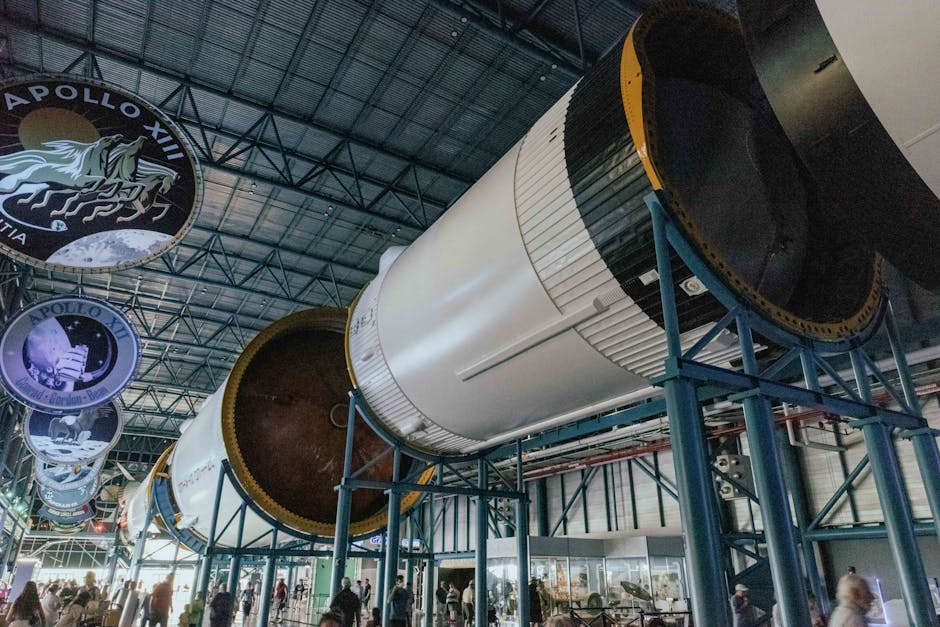
Several institutions maintain open archives that let you work directly with these artifacts. NASA hosts restored audio, transcripts, and imagery; the U.S. National Archives preserves federal records and broadcast material; the Smithsonian network curates flown hardware and media with context. The table below lists core source types and where to start.
| Source Type | What It Contains | Where to Access |
|---|---|---|
| Air-to-Ground Audio & Transcripts | Capsule communications, Mission Control loop, time stamps, call signs | nasa.gov |
| Television Broadcasts | Live lunar surface TV feed, network anchoring, global relays | archives.gov |
| Photographs & 16mm Film | Hasselblad stills, DAC film from LM/CM, EVA sequences | nasa.gov, si.edu |
| Mission Reports & Press Kits | Engineering data, timelines, procedures, official summaries | nasa.gov |
| Contemporary News Coverage | Real-time public narrative, commentary, viewership context | archives.gov |
Voices from the loop: what the landing audio reveals
Audio carries urgency that transcripts can’t fully convey. During powered descent, Armstrong reports program alarms tied to the Lunar Module’s computer load. The CAPCOM (Charlie Duke) and guidance team assess quickly and keep the landing “go.” Breathing rhythms and clipped confirmations make clear how tight the margins felt. When Armstrong and Aldrin touch down, Armstrong radios, “Tranquility Base here. The Eagle has landed.” Duke replies with relief heard across decades: “You got a bunch of guys about to turn blue. We’re breathing again. Thanks a lot.” NASA’s synchronized records preserve that exchange with its original timing and intercom texture, which matters for understanding decision tempo and workload on both ends of the loop.
Minutes later, status checks flow in a cadence familiar to anyone who has worked a control room. Consumables, engine condition, guidance alignment, and landing radar are verified before the “stay/no-stay” call. The air-to-ground track shows why the first surface steps did not happen right away. Procedures came first, configuring the spacecraft, powering down, and securing data. Seen in print, that may read dry. Heard in voice, it communicates a professional calm that underpins the achievement.
Surface audio archives also carry small human moments: Aldrin describing the view as “Magnificent desolation,” Armstrong working with the TV placement, and both astronauts narrating how dust behaves underfoot in one-sixth gravity. The words were recorded live for engineering and science value, yet they now serve as eyewitness accounts. NASA’s release files and mission transcripts align those lines with exact mission elapsed times, making cross-referencing straightforward.
How the public witnessed it: TV, radio, and shared spaces
The televised moonwalk shaped how people remember the event. Networks cut between the lunar feed and studio anchors, while ground stations in Australia and elsewhere supported the downlink. The soft, high-contrast picture (ghostly, but clear enough to follow) became a shared reference in living rooms, college lounges, and city squares. Archival broadcast recordings capture crowd reactions at the instant Armstrong steps onto the surface. You see people leaning toward the screen, then exhaling together at the first footprint.
Newspapers, radio, and wire services created another layer of documentation. Reporters logged exact times, carried brief quotes minutes after they were spoken, and noted where people gathered to watch. That material acts as a time capsule of public response. Collections at the archives.gov and associated repositories preserve these broadcasts and bulletins, including pool feeds that stations shared when satellite capacity was limited.
Photographs and film as eyewitnesses
Still photographs from the lunar surface are among the most examined primary sources of the mission. Shot on modified Hasselblad cameras with 70mm film, they include calibration marks that help establish geometry and scale. Sequences show tasks in order: egress, contingency sample collection, flag deployment, and instrument setup. Because many frames are bracketed or partially framed, you get a candid sense of how fast the crew worked and where attention was focused.
Onboard 16mm film (the DAC camera) adds motion to the record, engine plume behavior, ascent staging, and parts of the EVA. Properly logged, each reel links to mission elapsed time. When matched with the audio and transcript, you can reconstruct a multi-angle timeline of the landing and departure. The si.edu collections and NASA image libraries provide high-resolution scans along with basic technical details, which helps separate original frames from later reproductions.
Working with primary sources: practical tips
Primary sources are powerful when you triangulate them. Audio without a timeline can mislead; a photo without its original caption can lose context. A few habits make the difference between casual browsing and real understanding.
- Start with synchronized sets: pair NASA transcripts with the matching audio segments and image time stamps.
- Note call signs and roles: CAPCOM speaks for the ground; LM and CSM tags identify who’s on the loop.
- Keep the mission clock handy: mission elapsed time (MET) anchors events better than wall-clock time zones.
- Check provenance: download from official repositories like nasa.gov or archives.gov to avoid altered copies.
- Read the press kit and mission report for procedures, then revisit the audio to hear those procedures in action.
My own approach is to map a single moment (the 1202/1201 program alarms) across three layers: audio for tone, transcript for clarity, and the guidance section of the mission report for technical cause. That small cross-check turns a famous anecdote into a documented event. The same method works for the “one small step” sequence or the ascent ignition call.
What eyewitnesses remember, and why it matches the record
Ask people who watched the landing live and you’ll hear consistent themes: the shaky TV image that still felt unmistakable, Walter Cronkite removing his glasses as words failed, the pause after touchdown before anyone celebrated. Those memories square with the primary sources because the public and the professionals were synchronized by the same feed and timeline. The crew’s words were short and clear, Mission Control kept commentary precise, and broadcasters stayed close to the raw audio.
The value of primary materials shows up when myths arise. Claims about studio staging, lighting anomalies, or missing telemetry fall apart when you examine unbroken audio loops, simultaneous international tracking logs, and multiple independent recordings preserved by institutions like nasa.gov. The consistency across formats (voice, video, film, and engineering notes) provides a robust chain of custody from 1969 to today.
Eyewitness accounts of the 1969 moon landing live in the voices of the astronauts, the callouts from Houston, the frames the crew exposed, and the broadcasts that carried those moments to the public. Read and listen across these records and the landing becomes less like a legend and more like a well-documented operation carried out by teams who were prepared for off-nominal moments and ready to adapt.
Primary sources reward careful attention. They let you hear a room hold its breath and then relax, see dust drift at one-sixth gravity, and follow the precise order that turned a powered descent into a safe landing. Start with official repositories such as nasa.gov, complement with holdings at archives.gov, and use curatorial context from si.edu to frame what you’re seeing. The result is an account that feels immediate, verifiable, and human.