Renaissance Manuscripts Unlocking Knowledge from the Past
Renaissance manuscripts bridge two information revolutions: the long medieval tradition of handwritten books and the rapid spread of print after 1450. They preserved classical texts, recorded new observations in science and medicine, and carried the notes, drafts, and correspondence of thinkers who defined early modern Europe. Many were copied in monastic scriptoria or humanist workshops; others are author autographs, from lecture notes to working notebooks. These sources hold marginalia, diagrams, ownership marks, and bindings that printed editions rarely capture.
Scholars use these materials to trace how ideas moved across regions and languages, and how knowledge changed through copying, commentary, and revision. Watermarks identify paper mills and trade routes. Pigments and inks point to specific places and dates. Multispectral imaging now recovers erased or faded text, while standardized digital protocols let collections speak to each other. Access has widened, and with it the ability to verify claims, compare witnesses, and correct errors that stood for centuries.
What counts as a Renaissance manuscript and why it matters
Most historians define “Renaissance manuscripts” as handwritten items produced between the late fourteenth and early seventeenth centuries, a period when humanist scholarship emphasized returning ad fontes, back to original sources. The category is broader than illuminated books. It includes humanist copies of Cicero and Virgil, monastic chronicles, legal registers, merchant account books, medical recipe collections, artists’ model books, astronomical tables, maps, and letters. This variety matters because the shift from script to print was uneven. In some fields, especially law, music, and academic commentary, manuscript circulation remained strong well after printing began. Copyists adapted to new needs, producing paper codices for speed and cost rather than luxury parchment volumes. The result is a record of practice as well as theory: what surgeons prescribed, what navigators calculated, what teachers actually taught.
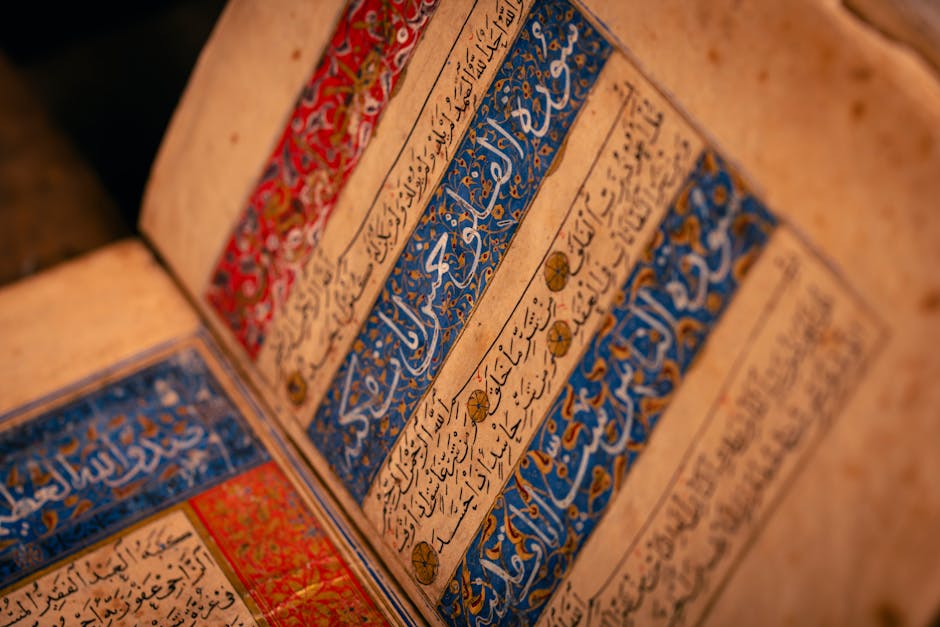
Evidence preserved in these artifacts often changes long‑accepted narratives. The Archimedes Palimpsest, for example, revealed texts overwritten in a medieval prayer book and has been studied with multispectral imaging to read erased layers, reshaping views of ancient mathematics; the project shares documentation and outcomes online at archimedespalimpsest.org. Projects like this show why manuscripts remain essential even when early printed editions exist. Handwritten witnesses keep traces of process (cancellations, alternative readings, trials of diagrams) that editions and translations tend to normalize.
How experts read, date, and authenticate them
Codicology and paleography give a toolkit for reading and dating manuscripts. Script type helps identify time and region: humanist minuscule rose in fifteenth‑century Italy, textura lingered in liturgical books, and cursive hands spread through chancery and business records. Decoration and ruling patterns also carry clues. Paper analysis is equally important. Watermarks (designs in the paper mould) can often be matched to known paper mills. When I first handled a small Italian humanist miscellany, a simple “ox head” watermark led to a known mill in Fabriano, which corroborated a date suggested by the script. This kind of cross‑checking is routine in research libraries.
Scientific methods support these judgments. Non‑invasive spectroscopy can profile inks and pigments. DNA and protein analysis have been piloted to identify animal species in parchment, which can indicate regional supply chains. These approaches supplement, rather than replace, close reading of content and provenance. Ownership inscriptions, armorial stamps, and later bindings document a book’s movements. Large research libraries have cataloged these features extensively; see collection overviews and digitized catalogs at the bl.uk and the bodleian.ox.ac.uk. Accurate cataloging reduces duplication and helps track dispersed sets, such as scientific notebooks split by early dealers.
Digitization, standards, and open access
Access to Renaissance manuscripts changed with coordinated digitization and shared standards. The International Image Interoperability Framework (IIIF) allows images and metadata from different institutions to interoperate, so a reader can view folios from separate libraries side by side in a single viewer; documentation and adopters are listed at iiif.io. Major collections use these standards, including the British Library, the Bodleian Libraries, the Bibliothèque nationale de France, and the Vatican Apostolic Library. Cross‑collection discovery platforms such as europeana.eu aggregate records that point back to institutional repositories for full images and descriptions.
Imaging also got better. Multispectral and hyperspectral techniques, now common in conservation labs, can recover text erased in palimpsests, reduce bleed‑through, and differentiate inks. Shared projects funded by organizations like the polonskyfoundation.org have digitized thousands of items and published them with open viewers. The Vatican Library’s digital platform and the University of Oxford’s viewer make high‑resolution files and structured metadata available for scholarly reuse; institutional gateways are accessible at vaticanlibrary.va and ox.ac.uk.
Handwritten Text Recognition (HTR) and layout analysis are advancing fast. Platforms from research cooperatives, notably Transkribus by Read COOP, train machine‑learning models on specific hands or scripts and can produce exportable transcriptions that are then corrected by humans. Details on community models and training are at readcoop.eu. These tools do not remove the need for expert review, but they speed up initial transcription and indexing, which means more manuscripts become searchable and citable. Crowd‑assisted projects benefit from this pipeline, turning volunteers’ corrections into better models for future work.
What we are learning from current research
Renaissance manuscripts continue to update core narratives in science, medicine, art, and cartography. Astronomical notebooks and tables have helped date the spread of heliocentric models prior to widely cited printed editions. Medical recipe collections show the circulation of materia medica across the Mediterranean and into northern Europe, tracking ingredients by vernacular and Latin names. Art treatises and workshop books record pigments and techniques that conservators use to guide cleaning and restoration; catalog essays and manuscript facsimiles at bnf.fr and yale.edu provide reference points for this work.
Marginalia offer especially rich data. Students’ notes in university texts capture how lectures framed Aristotle, Galen, or Avicenna for local curricula. Merchants’ account books show price data for paper, pigments, and instruments. Music partbooks document performance practice when print could not easily handle complex notation or small‑run repertory. When I worked with a civic archive in Tuscany, an otherwise routine notarial register included a short astronomical diagram squeezed into the gutter margin, likely a clerk copying from a master he admired. Such annotations humanize the record and connect it to lived practice.
Fragment research has also grown. Medieval and Renaissance leaves were often reused in bindings for later printed books. Projects now identify, image, and virtually reunite these fragments. Collaborative databases and image‑matching tools help piece together once‑whole codices scattered across libraries and private collections. The approach has reshaped our understanding of how texts moved through printers’ workshops and regional binderies, and it often restores missing sections of important authors.
Ongoing challenges and how institutions address them
Preservation comes first. Many manuscripts sit on acidic nineteenth‑century boards or retain iron‑gall inks that corrode paper. Conservation labs stabilize bindings and control storage climate, then digitize to reduce handling. Funding and staff time remain tight, so institutions triage by research value, physical risk, and demand. Clear rights statements and stable identifiers matter as much as images. Libraries that publish IIIF manifests, persistent URLs, and downloadable metadata make scholarly citation and replication straightforward. Infrastructure and policy details are public at portals run by the British Library, the Bodleian Libraries, and the Vatican Library; institutional homepages at bl.uk, bodleian.ox.ac.uk, and vaticanlibrary.va link to these services.
Discovery is another hurdle. Catalog records vary in depth and vocabulary. Subject headings can miss interdisciplinary value in, say, mathematical diagrams within a legal register. Shared ontologies and linked data help, but progress is uneven. Community transcription programs and classroom partnerships add capacity and bring in fresh subject expertise. Aggregators such as europeana.eu and national portals point to holdings across borders, which supports comparative projects that used to be impractical without travel.
Finally, access must remain equitable. High‑resolution downloads and open licenses enable new research, but not every institution can host large files or bespoke viewers. Lightweight IIIF‑compatible viewers and shared hosting ease that gap. Documentation and training from standards bodies and cooperatives, including resources at iiif.io and readcoop.eu, give smaller archives a path to join global discovery while keeping local control over context and description.
Renaissance manuscripts are more than artifacts; they are working documents that record how people learned, argued, designed, and measured. Research libraries, standards bodies, and collaborative platforms now make it realistic to compare witnesses across continents, test claims against primary sources, and recover text thought lost. Imaging, interoperable metadata, and HTR are speeding up description and access, but the core work remains careful reading, clear attribution, and shared methods. Continued investment in conservation, open platforms, and training will keep these sources available and useful for students, researchers, and engaged readers alike.