Japanese Internment Camp Letters Stories of World War II Injustice
Letters written from behind barbed wire capture the human cost of the wartime removal and incarceration of approximately 120,000 people of Japanese ancestry in the United States between 1942 and 1945. The notes are plain on the surface (postcards to a favorite teacher, appeals to officials, diary-like messages about dust and wind) but they record ruptured schooling, lost businesses, and the effort to hold a family together under guard. Many survivors described mail as a lifeline. Paper moved more freely than people.
Official policy allowed correspondence, though it was monitored. The War Relocation Authority (WRA) operated civilian camps while the Department of Justice ran separate facilities for “enemy aliens.” Mail in both systems was subject to inspection and, at times, redaction. The U.S. National Archives preserves guidance and records showing that communications were screened and that packages could be restricted on security grounds, which shaped what people dared to say and how they said it. These constraints make the letters’ candor even more striking. Credible archives now make thousands of these pages public, including collections at the National Archives and Records Administration, or NARA, archives.gov, Densho densho.org, the Japanese American National Museum janm.org, and the Library of Congress loc.gov.
Context: Why letters mattered inside the camps
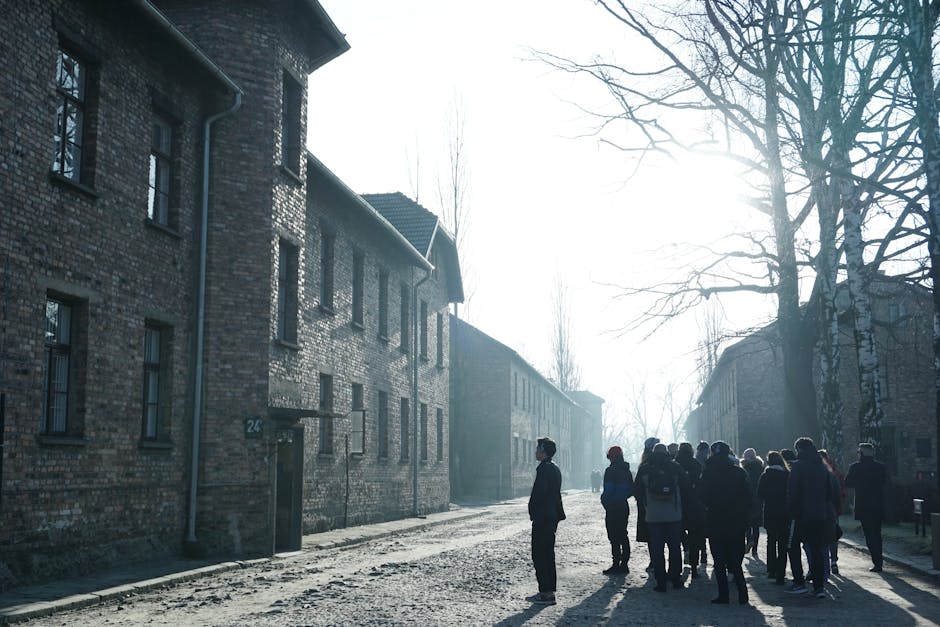
After Executive Order 9066 and the creation of exclusion zones on the West Coast, families received days or weeks to pack before transport to makeshift assembly centers at racetracks and fairgrounds, then to remote camps such as Manzanar, Heart Mountain, and Poston. Phones were scarce and expensive. Travel into and out of the exclusion areas required permits few could get. Mail became the one reliable way to share news, ask for help, and document daily life. WRA regulations permitted unlimited letters but enforced English translations when needed and barred maps, photographs of sensitive sites, and coded language. The material culture of correspondence (stationery, censored envelopes, camp postmarks) now serves as evidence of the state’s reach into private lives. NARA’s holdings of WRA records, including inmate case files and camp administration correspondence, outline this system and its uniformity across sites archives.gov.
Censorship shaped tone and content but did not stop dissent or grief from slipping through. Writers described dust storms seeping through barracks slats, school openings that lacked books, and the scarcity of doctors. Others recounted small victories: a shipment of seeds for camp gardens, a friend’s acceptance to a Midwestern college after the WRA’s student relocation program cleared them to leave. Reading scans of these letters today on Densho, the pencil strokes look tentative in early months and steadier as routines set in. That visual shift mirrors the emotional arc many families describe in oral histories: shock, adjustment, and a stubborn push to retain a sense of normal life.
Children’s voices and the Clara Breed collection
One of the best-known exchanges involves San Diego librarian Clara Breed and the children she served before their removal in 1942. When the families boarded trains, Breed handed out stamped postcards and asked the children to write. They did. Dozens of letters reached her from Santa Anita Assembly Center and later from camps in Arizona, Utah, and Wyoming. The children thanked her for books, reported on new schools, and asked for craft supplies. Joanne Oppenheim’s research, later published as “Dear Miss Breed,” drew on these letters to track how a librarian’s care created a reading lifeline for scattered students. The Japanese American National Museum preserves this collection and shares many scans and transcripts, making the children’s firsthand accounts available to the public janm.org.
Those messages from teenagers cut through policy language with clarity. A high school senior wrote about missing graduation and watching her father struggle to recreate a routine inside a barrack. Another described how a book cart rolled between rows of cots in an assembly center, a small fix for a harsh setting. Breed, in turn, wrote back and mailed books and supplies within the limits of what camp rules allowed. Her advocacy also extended outside the mailroom. She spoke up locally against mass removal and later testified on behalf of Japanese American families in San Diego. Densho’s encyclopedia and digital archives place these children’s letters in context and link them to broader WRA schooling records and camp newsletters that echo the same themes of boredom, resilience, and interrupted ambitions densho.org.
Family separation, the “loyalty questionnaire,” and hard choices on paper
Family correspondence shows how policy divided households. In the first months, noncitizen men arrested after Pearl Harbor remained in Department of Justice camps or Army facilities while their families were moved by the WRA. Wives wrote to husbands who did not know when transfer or release might come. Parents wrote to adult children who had left for wartime jobs or college in the Midwest under supervised relocation. Letters became the place where people weighed what to do about the 1943 “loyalty questionnaire,” the WRA’s clumsy attempt to assess allegiance through two key prompts, questions 27 and 28. These asked about willingness to serve in the U.S. military and to “forswear” allegiance to the Japanese emperor. For U.S.-born citizens, renouncing an allegiance they never held felt insulting. For noncitizen immigrants barred by law from naturalization, forswearing risked becoming stateless. The Commission on Wartime Relocation and Internment of Civilians (CWRIC) documented these dilemmas in its report “Personal Justice Denied,” concluding that the incarceration stemmed from “race prejudice, war hysteria, and a failure of political leadership,” not from proven security threats. That report and related records are accessible through NARA and remain the government’s most comprehensive accounting of the policy’s harms archives.gov.
Letters from 1943 and 1944 often reference realignment to Tule Lake after the WRA designated it a segregation center for those who answered “no-no” or declined to answer these two questions. Families debated in writing whether to transfer together or stay split across different camps. The paper trail captures competing pressures: fear of ostracism, frustration with loyalty tests, and concern for elder parents or young children. These were not abstract debates. Answers controlled schooling, work assignments, and, in some cases, the risk of later deportation. Densho’s case histories and camp records preserve examples of how a few sentences on a government form reshaped the course of entire families’ lives densho.org.
Resistance, the courts, and the language of rights
While many letters dwell on day-to-day life, a steady thread concerns rights. Draft-age Nisei at Heart Mountain wrote to the Department of Justice and to newspapers arguing that military service should be tied to the restoration of their families’ civil liberties. The Heart Mountain Fair Play Committee emerged from this exchange of letters and meetings, leading to criminal prosecutions of dozens of draft resisters in 1944. Their appeals and court filings argued a simple point: a government that removes a family to a camp without due process cannot then compel the son to serve. Densho’s encyclopedia and digitized court documents trace these cases and their later pardons densho.org.
The legal fight over exclusion itself also unfolded in writing that crossed prison walls. Fred Korematsu, Gordon Hirabayashi, and Minoru Yasui challenged the curfew and exclusion orders. Mitsuye Endo pursued a habeas petition asserting that a loyal U.S. citizen could not be detained without charge. The Supreme Court’s 1944 rulings split sharply. In Ex parte Endo, the Court held that the government could not detain a concededly loyal citizen, a decision that forced the administration to start closing the WRA camps. On the same day, the Court upheld Korematsu’s criminal conviction for violating the exclusion order, a ruling that has been discredited in the legal community and effectively repudiated by the Court in later dicta. Primary texts, including the opinions and filings, are available via official repositories such as the Supreme Court and NARA supremecourt.gov and archives.gov.
Preservation, redress, and what the letters teach now
Archival work after the war ensured these voices would not disappear. Community groups saved family papers. Journalists and librarians collected camp newsletters and correspondence. Densho and JANM formalized this work, cataloging, digitizing, and explaining materials so that researchers and families can connect letters to photos, maps, and oral histories. The Smithsonian’s National Museum of American History built public understanding through its “Righting a Wrong” exhibition and related materials that highlight letters and artifacts from camps to show how policy reshaped regular life si.edu.
Congress acknowledged the injustice in the Civil Liberties Act of 1988, which apologized and provided $20,000 in redress payments to surviving incarcerees. The legislative record cites the CWRIC’s findings and includes personal testimony and letters that documented the damage done to families through lost income, missed education, and trauma that carried across generations. NARA and the Department of Justice host materials that explain the law, its implementation, and the role survivor records played in shaping it archives.gov.
Reading camp letters today still lands with force. A teenager asks a librarian for more books because the library is the only quiet place in a noisy barrack. A mother writes a son in the Army from a camp she cannot leave. A family weighs how to answer a loyalty form that does not fit their lives. These fragments teach civics through lived detail. They show how quickly rights can narrow, how oversight can falter, and how documentation (kept, preserved, and made public) helps a country face its errors. The collections at Densho, JANM, NARA, the Library of Congress, and the Supreme Court’s document repository make this history verifiable and accessible. The letters remain the most human form of record in a system built to flatten individuality, and they ask readers to measure policy against people.
The letters from incarceration camps show the difference between official language and lived reality. Policies spoke of “relocation” and “protection,” yet personal mail records lost homes, cut schooling, forced separations, and quiet forms of courage. Censorship narrowed what could be said, but it did not erase emotion or prevent people from asserting dignity, learning, working, and resisting. Credible archives now carry these voices forward, and redress legislation recognized the harm they described. The paper trail outlasted the barbed wire. It still does the necessary work of reminding readers what happened, who paid the price, and why records (carefully saved and publicly shared) are a guardrail for civil liberties.