Historic Treaties that Shaped Nations Full Texts and Contexts
Treaties are more than signatures on parchment. They draw borders, create institutions, end wars, and sometimes open new wounds. Reading the full texts alongside the backstory shows what negotiators chose to say out loud, what they left implied, and how those choices hardened into laws and maps. Historic agreements such as Westphalia, Paris, Versailles, and the UN Charter still shape how states claim authority, manage disputes, and answer to global rules.
Access to the originals is no longer the domain of specialists. Many foundational treaties sit online in curated archives with side-by-side commentary, scanned originals, and searchable clauses. When I teach students to compare a preamble’s aspirations with enforcement articles, they start spotting the patterns that explain why some treaties endure and others buckle under pressure.
Statehood, Sovereignty, and the Classic Settlements
The Peace of Westphalia (1648) gets cited as the birth certificate of modern sovereignty. That label is a simplification, yet the treaties of Münster and Osnabrück did normalize the idea that rulers could exercise authority without external meddling. The texts and context are accessible through curated entries at Britannica, which traces how the settlement stabilized the Holy Roman Empire’s internal religious and political order. Reading the articles on non-interference shows how practice slowly matched principle over centuries rather than overnight.
Recognition of a new state can hinge on one document. The Treaty of Paris (1783) formally acknowledged the independence of the United States and fixed borders from the Atlantic to the Mississippi. The original text, with its spare language on British withdrawal and debts, is preserved by the U.S. National Archives. The phrasing around fishing rights and Loyalist property points to how economic interests and reconciliation were bargained alongside sovereignty.
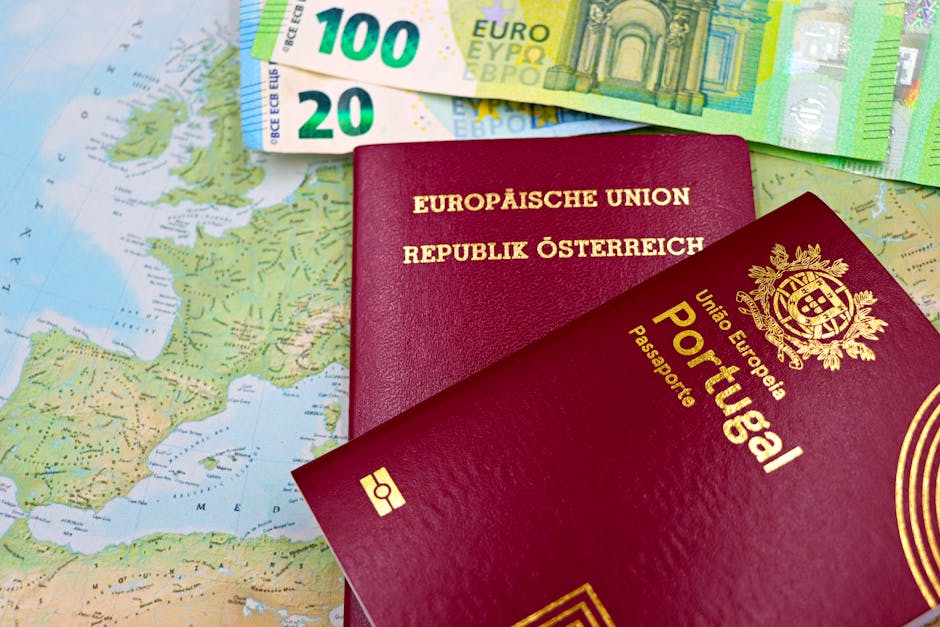
After the Napoleonic Wars, the Congress of Vienna (1815) combined cartography with concert diplomacy. The Final Act sought a “just balance of power” to deter hegemony, a phrase that reads like a manual for nineteenth-century order. The Avalon Project at Yale Law School hosts the full text, which includes territorial swaps and guarantees. I often ask readers to note how the agreement couples territory with river navigation regimes, a sign that trade corridors were treated as security assets.
Empire, Trade, and the Price of Unequal Agreements
Treaties can entrench inequality when force sits behind the pen. The Treaty of Nanking (1842) ended the First Opium War, ceded Hong Kong, and opened treaty ports with fixed tariffs. The document, reproduced by the UK National Archives, shows blunt clauses on indemnities and extraterritoriality. The language is brief because the guns did the talking. Reading it next to Chinese memorials from the period helps explain the political aftershocks.
On another continent, the Treaty of Guadalupe Hidalgo (1848) transferred half of Mexico’s territory to the United States after a short but decisive war. The Library of Congress hosts the text with context on property rights and citizenship guarantees for residents in the annexed regions. The rights promised on paper collided with local realities, especially around land titles, which illustrates how enforcement capacity can define a treaty’s lived meaning.
When Japan emerged victorious over Russia, the Treaty of Portsmouth (1905) announced a new balance in East Asia. The terms, mediated by Theodore Roosevelt, granted Japan control over Port Arthur and influence in Korea. A concise overview with references sits at Britannica. The agreement’s careful wording on spheres of influence foreshadowed later annexations, a reminder that euphemisms in diplomacy often cover hard power shifts.
The table below brings several influential treaties into one view, with direct links to read their texts.
| Treaty | Year | Parties | Core Issue | Outcome | Read the text |
|---|---|---|---|---|---|
| Peace of Westphalia | 1648 | Holy Roman Empire states, France, Sweden, others | End Thirty Years’ War; religious-political settlement | Normalization of state sovereignty within Europe | Avalon Project |
| Treaty of Paris (US–UK) | 1783 | United States, Great Britain | End American Revolutionary War | US independence and borders recognized | U.S. National Archives |
| Congress of Vienna (Final Act) | 1815 | Major European powers | Post-Napoleonic order | Balance of power and territorial rearrangements | Avalon Project |
| Treaty of Nanking | 1842 | Qing China, Great Britain | End First Opium War | Ceded Hong Kong; opened treaty ports | UK National Archives |
| Guadalupe Hidalgo | 1848 | Mexico, United States | End Mexican–American War | Large territorial cession to the US | Library of Congress |
| Treaty of Portsmouth | 1905 | Japan, Russia | End Russo-Japanese War | Japanese ascendancy in East Asia | Britannica |
| Treaty of Versailles | 1919 | Allied Powers, Germany | Post–World War I settlement | Territorial losses; reparations; League of Nations | Avalon Project |
| UN Charter | 1945 | United Nations members | Create global security framework | Security Council, General Assembly established | UN Treaty Collection |
| Treaty of Rome | 1957 | Six European states | Economic integration | European Economic Community founded | EUR-Lex |
| Good Friday Agreement | 1998 | UK, Ireland, Northern Ireland parties | End conflict in Northern Ireland | Power-sharing; constitutional changes | UK Government |
From Punishment to Institutions: Redesigning Order
The Treaty of Versailles (1919) is often remembered for reparations and “war guilt,” yet the text also launched the League of Nations and minority protections. The full document at the Avalon Project shows sweeping territorial clauses and strict limits on German armaments. Economists have argued over whether reparations were payable; the historical record makes clear that politics, not accounting, drove the enforcement debate.
The UN Charter (1945) moved from punishing a single state to building procedures. Its preamble commits “to save succeeding generations from the scourge of war,” a line that still guides public expectations of collective security. The authenticated text is available via the UN Treaty Collection. Article 2 balances sovereign equality with duties to settle disputes peacefully. When students compare these clauses to Security Council voting rules, they quickly see why veto power both stabilizes and frustrates action.
Regional integration took a different route. The Treaty of Rome (1957) created a common market, reducing tariffs and setting supranational rules. A concise legal summary sits on EUR-Lex. The text looks technical (customs unions, competition law) but those articles rewired politics by binding states to shared courts and competition regulators. That shift from ceasefires to institutions marks one of the biggest evolutions in treaty-making.
- Read preambles for values, operative articles for obligations, and annexes for the fine print that often decides outcomes.
- Cross-check a treaty’s text with implementation reports or court cases to gauge real impact.
- Map clauses to geography to see how borders, rivers, and trade routes shape enforcement.
Peacecraft: How Modern Accords Balance Identity and Security
Late-twentieth-century peacemaking moved beyond armistices to constitutional engineering. The Camp David Accords (1978) produced a framework that led to the Egypt–Israel Peace Treaty, trading land for recognition and security guarantees. The Avalon Project hosts the texts, including annexes on Sinai withdrawal and navigation rights. The specificity on timelines and monitoring reflected lessons from earlier breakdowns.
The Good Friday (Belfast) Agreement (1998) tackled a layered conflict by pairing power-sharing with consent principles and cross-border institutions. The official text is published by the UK Government and mirrored by authorities in Ireland and Northern Ireland. The agreement’s language avoids zero-sum sovereignty; it recognizes different identities while setting rules for policing, justice, and decommissioning. When I visited Belfast years after, murals had changed tone and everyday checkpoints had disappeared, a ground-level sign of institutional buy-in.
Another template came with the Dayton Accords (1995), which ended the Bosnian War by freezing the front lines into a complex federal structure. The documents, hosted by the U.S. Department of State, include a constitution for Bosnia and Herzegovina. The price of peace was heavy administrative fragmentation. That trade-off illustrates a common pattern: durable ceasefires often hinge on detailed power-sharing and international oversight.
Even well-designed treaties face stress tests. Spoilers exploit ambiguities, elections reshape incentives, and outside powers recalibrate support. The best agreements anticipate this with dispute resolution bodies, monitoring missions, and review clauses. Reading the text with an eye for those safety valves separates aspirational diplomacy from enforceable commitments.
Historic treaties still live in courtrooms, parliaments, and border posts. The texts show how leaders framed problems and what they were willing to trade to solve them. If a clause seems minor, check how it touches money, territory, or recognition; that is where power hides in legal prose. Curiosity pays off when you read the documents yourself and trace how words on a page refashioned entire regions.