Authentic Viking Sagas Exploring Norse Culture and Mythology
Viking sagas sit at the crossroads of memory, myth, and recorded history. They preserve the voices of medieval Icelanders who wrote about people and events from the late ninth to early eleventh centuries, weaving family histories with sharp dialogue, precise place names, and a careful eye for law and custom. While they were set down in the thirteenth and fourteenth centuries, scholars treat them as layered sources: part literature, part historical testimony. Read closely and cross-checked with archaeology, they give a grounded view of Norse society, belief, and travel that goes well beyond horned-helmet clichés.
What makes a saga “authentic”
Authenticity starts with manuscripts and the scribes who copied them. The Poetic Edda survives largely in the Codex Regius, a manuscript dated to the 1200s, and the family sagas are preserved across multiple vellum and paper copies. Iceland’s manuscript portal offers facsimiles and catalog entries that show how texts travelled and changed through time, which helps explain differences among versions and later editorial choices. See the manuscript records at handrit.is for a window into this chain of transmission.
The sagas were written after the events they describe, so historians weigh them against independent evidence. Place names, legal details, and genealogies often match what we find in charters and law codes. Encyclopedic overviews outline this approach clearly; for context on saga genre, origins, and reliability, consult Encyclopaedia Britannica, which summarizes scholarly consensus without romanticism.
Cross-disciplinary work gives the sagas their staying power. When a family feud in the text centers on a known farm site or assembly field, archaeologists can look for longhouses, boundary ditches, and graves. When a voyage narrative names rivers or trading posts, numismatics and dendrochronology may add dates and routes. The result is a pragmatic reading strategy: treat the sagas as informed narratives, neither pure fiction nor simple chronicle.
Norse mythology through the Eddas and beyond
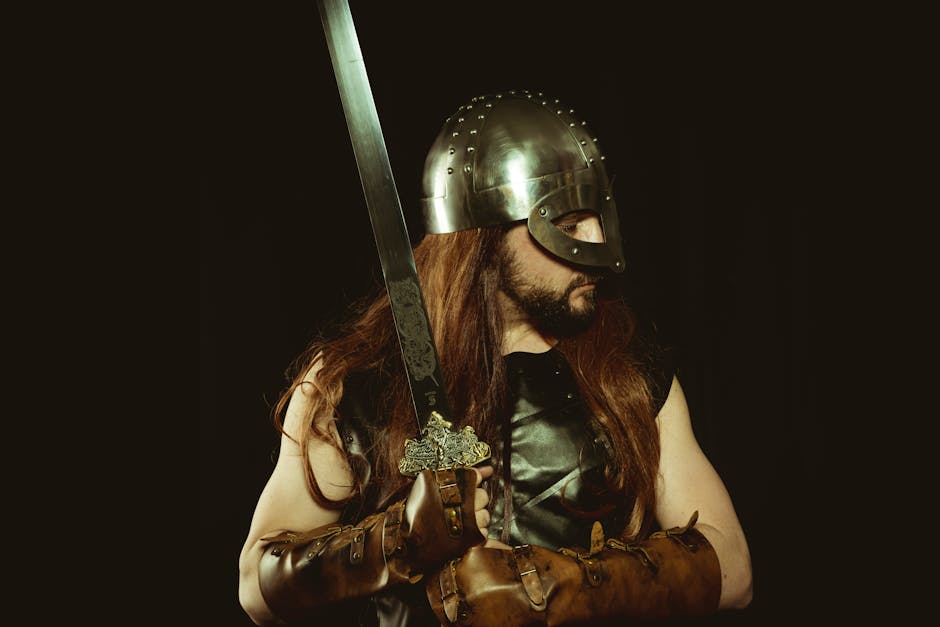
Most of what we know about Odin, Thor, Freyja, and Ragnarök comes from two works compiled in medieval Iceland: the Poetic Edda (anonymous mythic and heroic poems) and Snorri Sturluson’s Prose Edda (a handbook for poets that preserves myth to explain skaldic kennings). Overviews of both texts, including content lists and dating, are available at Britannica and help anchor discussions in established scholarship.
Snorri wrote with a clear purpose: keep complex poetic language alive. That lens shapes what he chose to include and how he framed myths. Comparative work shows where his Christian-era perspective may have streamlined or systematized beliefs that were more fluid across regions. Museum guides to objects with mythic scenes, like amulets and picture stones, help balance the texts. The National Museum of Denmark’s overview of Norse gods and symbols provides artifact-based context at National Museum of Denmark.
Skaldic poetry supplies another layer. Court poems about kings and battles were composed close to the events and rely on myth to craft praise. Because kennings require shared knowledge, they confirm how widely mythic references circulated among elites. Modern, peer-reviewed projects like Skaldic Poetry of the Scandinavian Middle Ages document these verses with commentary and translations at University of Aberdeen Skaldic Project.
Archaeology that tests and refines the sagas
Major discoveries have sharpened or corrected long-held assumptions. The Oseberg and Gokstad ship burials in Norway set a baseline for elite display, woodworking, and textile skill. The Museum of Cultural History in Oslo maintains accessible dossiers on both finds with up-to-date conservation insights at Museum of Cultural History.
One widely cited case concerns the Birka grave Bj 581 in Sweden. Once assumed to be a male warrior based on weapons, the individual was confirmed as biologically female through ancient DNA and isotopic work in 2017, reshaping discussions about martial roles. The study by Hedenstierna-Jonson and colleagues is published by Wiley in the American Journal of Physical Anthropology and remains a touchstone in method and interpretation; overview and citation details are available via Wiley Online Library.
Runestones and monumental sites also anchor events described in texts. The Jelling stones in Denmark, raised by King Harald Bluetooth, record the Christianization of the realm and use language that aligns with political shifts found in chronicles. The site guide at Kongernes Jelling explains the inscriptions and the surrounding complex. When saga timelines place figures in Denmark’s power struggles, Jelling provides an independent historical frame.
| Source | Date/Period | What it Adds | Where to Access |
|---|---|---|---|
| Poetic Edda | c. 1200s manuscript preserving older poems | Mythic narratives, cosmology, heroic lore | Britannica |
| Prose Edda (Snorri) | c. 1220s | Systematic account of myths, poetics for skalds | Britannica |
| Íslendingasögur (Family Sagas) | 1200s–1300s about 900s–1000s | Settlement stories, law, feud, travel | Icelandic Saga Database |
| Archaeology (ships, graves, towns) | Viking Age contexts | Material culture, diet, trade, status | Museum of Cultural History |
| Runestones (e.g., Jelling) | 10th century | Named persons, religion, rulership | Kongernes Jelling |
Life, law, and travel in the sagas
Everyday culture shows up in small details: how assemblies met, how fosterage bound families, how farms were run, and how marriages were negotiated. The Althing in Iceland, founded around 930, features across the family sagas as a place where disputes moved from violence to arbitration. The official parliamentary history offers a concise overview of its origins at Althingi, which pairs well with saga episodes about lawsuits and compensation.
Women appear as landholders, litigants, and travelers in these narratives. Some characters push against expected roles, while others work within them to shape outcomes. Scholarship by Judith Jesch on the Viking diaspora surveys evidence for female mobility and property across the North Atlantic and British Isles; summaries and project links are available through her institutional page at University of Nottingham. Reading this alongside saga scenes makes the social fabric more legible.
Trade and travel connect the sagas to wider geographies. Silver hoards, Arabic dirhams found in Scandinavia, and town excavations at Ribe and Kaupang support accounts of far-reaching routes. The National Museum of Denmark’s Ribe Viking Centre research pages and exhibitions show how craft, market life, and shipping linked farmers to merchants and rulers; see overviews at National Museum of Denmark. On a personal note, my first visit to the Jorvik center in York many years ago made saga trade scenes feel concrete, the smell lab and street reconstructions mirrored the busy craft passages I had just read in Egils saga.
- Reliable ways to start reading: The Sagas of Icelanders (Penguin Classics) for a broad sampler; Jackson Crawford’s translations of the Poetic Edda for accessible myth; the free, searchable texts at the Icelandic Saga Database; and museum sites like Oslo’s Viking Ship Museum for artifact context.
Language choice shapes pace and tone. Modern translations vary from literal to literary. Penguin’s Sagas of Icelanders gathers cornerstone texts with notes and maps that help track people and farms; publisher information is at Penguin Random House. Pair a readable translation with a map and a family tree, and the dense cast becomes manageable.
Recent syntheses pull research threads together. Archaeologist Neil Price frames the era as a complex web of belief, politics, and mobility in Children of Ash and Elm (2020), which has become a widely cited, evidence-heavy overview. Author pages and interviews give a sense of method and scope; see the publisher’s listing via Basic Books. Using a modern survey with footnotes alongside primary texts keeps interpretation grounded.
Authentic Viking sagas reward patient reading because they sit so close to lived experience. Manuscripts, Eddas, archaeology, and runestones do not always agree, and that friction is where real understanding forms. The more you cross-reference a passage with an object, a place, or a legal term, the more Norse culture comes into focus. If one scene or artifact grabbed your attention here, pick a single saga and read it with a map open, the voices carry further when you know exactly where the next turn in the path leads.