The discovery of the Rosetta Stone in 1799 marked a pivotal moment in the study of ancient Egypt, transforming the understanding of a civilization that had long captivated scholars and the public alike. Found by French soldiers during Napoleon’s campaign in Egypt, the stone’s unique inscriptions provided This breakthrough not only unlocked the secrets of pharaonic history but also laid the foundation for the modern field of Egyptology.
Before the Rosetta Stone’s unearthing, knowledge of ancient Egyptian language and culture was limited to fragmented sources and speculation. The trilingual inscription on the stone (written in Greek, Demotic, and hieroglyphic scripts) enabled linguists to make direct comparisons, ultimately leading to the translation of hieroglyphs. This achievement opened up vast historical records, religious texts, and everyday documents, offering an unprecedented window into one of humanity’s oldest civilizations.
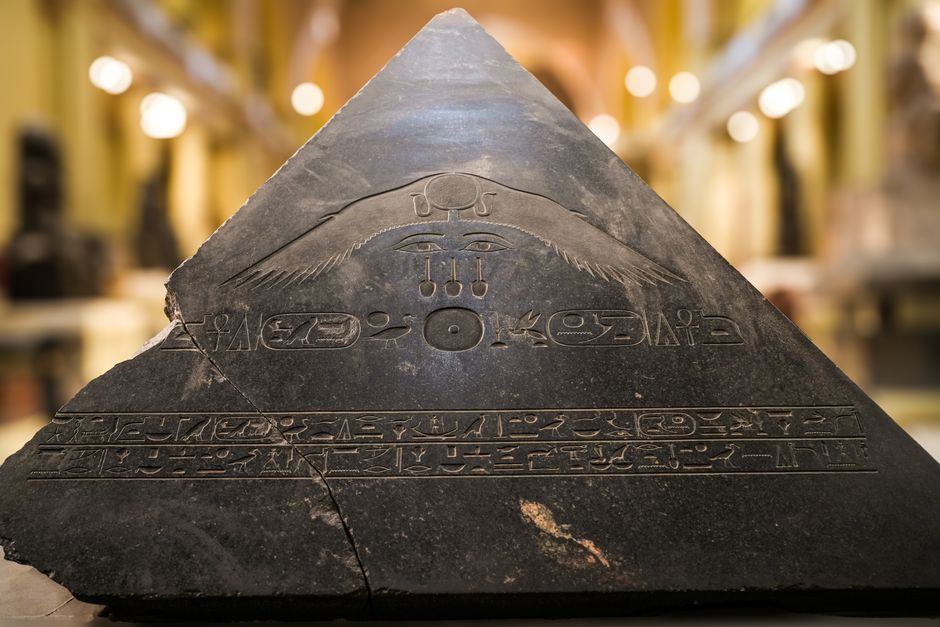
The Discovery of the Rosetta Stone
The Rosetta Stone was discovered in July 1799 near the town of Rashid (Rosetta) in the Nile Delta by a French soldier named Pierre-François Bouchard. The artifact was embedded in the wall of a fort being renovated by Napoleon’s troops. Measuring about 114 centimeters high and weighing over 700 kilograms, the stone immediately drew attention due to its inscriptions in three different scripts. Recognizing its potential significance, French scholars accompanying the military expedition began to study and document the artifact.
Following France’s defeat in Egypt, the British took possession of the Rosetta Stone under the terms of the Treaty of Alexandria in 1801. It was transported to London and has been housed at the British Museum since 1802, where it remains one of the institution’s most visited objects (britishmuseum.org).
The Trilingual Inscription: A Linguistic Breakthrough
The Rosetta Stone’s inscription is a decree issued in 196 BCE during the reign of Ptolemy V. What made it extraordinary was its presentation in three scripts:
- Hieroglyphic: Used for important or religious documents by priests.
- Demotic: The common script of Egypt at the time.
- Ancient Greek: The language of administration under the Ptolemaic dynasty.
This combination allowed scholars to use their knowledge of Ancient Greek as a starting point for deciphering the other two scripts. Thomas Young, an English polymath, made early progress by identifying that some hieroglyphs spelled out royal names. However, it was Jean-François Champollion, a French scholar, who made the decisive breakthrough in 1822 by demonstrating that hieroglyphs recorded both sounds and ideas (nationalgeographic.com).
The Birth of Egyptology
The successful decipherment of hieroglyphs marked the beginning of Egyptology as a scientific discipline. Scholars could now read temple inscriptions, tomb texts, and papyri, revealing details about Egyptian religion, governance, daily life, and art. The field attracted linguists, archaeologists, and historians from across Europe and beyond, leading to systematic excavations and research projects throughout Egypt.
Key developments following this breakthrough included:
- The publication of Champollion’s “Lettre à M. Dacier” in 1822, outlining his findings.
- The establishment of academic chairs and institutions dedicated to Egyptian studies in France, Britain, and Germany.
- Major archaeological discoveries such as the Valley of the Kings tombs and temples at Karnak and Luxor.
These efforts not only advanced academic knowledge but also fueled public fascination with ancient Egypt, a phenomenon that continues today through museum exhibitions and popular media.
Impact on Historical Understanding
The ability to read hieroglyphs transformed historians’ understanding of ancient Egypt. Previously, much of what was known came from Greek and Roman sources or biblical references, which were often incomplete or inaccurate. Direct access to Egyptian texts allowed scholars to reconstruct dynastic histories, religious beliefs, and social structures with far greater accuracy.
Some notable insights gained include:
- The chronology and achievements of pharaohs across different dynasties.
- Details about monumental construction projects such as pyramids and temples.
- Understanding of funerary practices and beliefs about the afterlife.
- Records of everyday activities, legal disputes, and economic transactions.
This new knowledge has influenced not only academic research but also art, literature, and even architecture worldwide.
Ongoing Legacy and Ethical Considerations
The Rosetta Stone remains a symbol of cross-cultural discovery and scholarly collaboration. However, its presence in the British Museum has sparked ongoing debates about cultural heritage and repatriation. Egyptian authorities have repeatedly requested its return, arguing that such artifacts are integral to national identity (bbc.com). These discussions highlight broader questions about ownership, preservation, and access to cultural treasures.
Despite these controversies, the legacy of the Rosetta Stone endures through continued research and public engagement. Advances in digital technology now allow for high-resolution imaging and online access to inscriptions, making ancient texts available to a global audience. Educational programs inspired by the stone encourage new generations to explore history, languages, and archaeology.
The unearthing of the Rosetta Stone stands as one of history’s most significant archaeological finds. Its role in unlocking ancient Egyptian writing not only revolutionized scholarship but also ignited enduring interest in one of humanity’s oldest civilizations. As debates over its future continue, the stone remains a powerful reminder of how a single discovery can reshape our understanding of the past and inspire curiosity for generations to come.