Guilds shaped the working lives of medieval Europeans far more than any single law or ruler. These craft and merchant associations wrote the rules for training, set quality standards, negotiated with city councils, and guarded trade secrets with surprising rigor. Their paperwork (apprenticeship indentures, journeymen letters, admission oaths, and shop ordinances) shows a tight web of control and community. When read closely, these contracts and codes reveal a practical system for managing risk, sharing knowledge, and policing reputation across booming towns from London to Lübeck.
1) What Guilds Actually Did: Power, Protection, and a Promise of Quality
Medieval guilds were private associations recognized by civic authorities. They tied a craft’s reputation to enforceable rules: how long a person trained, the tools they could use, the prices they could charge, and the quality they had to meet. City charters often granted guilds legal standing to inspect goods, fine offenders, and represent members in disputes. This created an early form of consumer protection and a steady training pipeline that made complex crafts sustainable across generations.
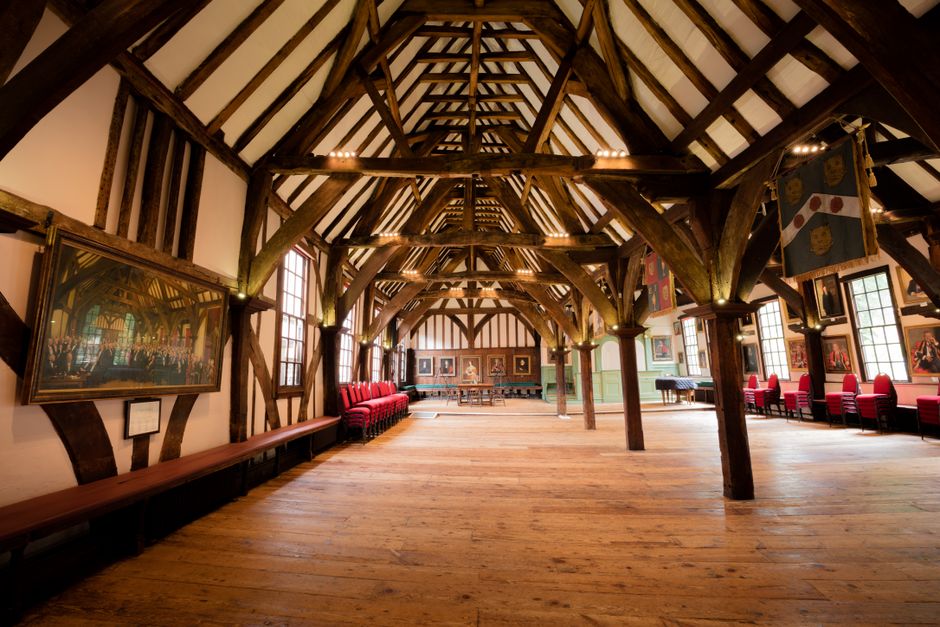
Not all guilds were the same. Merchant guilds focused on long-distance trade and privileges at ports, while craft guilds such as weavers, masons, butchers, and goldsmiths regulated production. Both types managed risk in different ways. Merchants pooled information on safe routes, while craft masters pooled knowledge on materials and standardized tools. Training sat at the center of both. The path from apprentice to journeyman to master was structured, recorded, and socially visible through rituals, sealed documents, and marks applied to goods.
At street level, guild power felt mundane and constant: a bell calling members to meetings, clerks recording fines for late attendance, or wardens stamping a hallmark on a finished piece. Those rhythms made guilds more than professional clubs. They were institutions that connected family life, faith observance, and civic duty.
| Stage | Typical Duration | Core Obligations | Proof/Output |
|---|---|---|---|
| Apprentice | 5–9 years (varied by craft and city) | Obey master, learn craft basics, no marriage without consent, keep trade secrets | Indenture contract; sometimes a small fee or clothing/tools provided |
| Journeyman | 2–5+ years | Paid labor per piece or per day, travel for experience, adhere to guild ordinances | “Wandering book” or letters of service; proof of good conduct |
| Master | On admission | Run a workshop, train apprentices, meet quality and hallmark rules, pay dues | Masterpiece assessed by wardens; oath and registration in guild book |
2) Reading the Fine Print: What Apprenticeship Contracts Actually Said
Apprenticeship indentures read like life-management documents as much as work contracts. A typical clause set the term (often seven years) then bound the apprentice to “faithfully keep” the craft’s secrets, obey household discipline, avoid taverns, and refrain from marriage without the master’s consent. The master promised food, lodging, training, and in some crafts, clothing or a basic set of tools at the end. A down payment or premium from the apprentice’s family was common, and penalties for running away could be steep.
Journeyman agreements were looser but still regulated. Guilds set maximum numbers of apprentices a master could hold, fixed day rates or piecework schedules in some trades, and limited night work to prevent corner-cutting. Written “letters of service” or stamps in a travel book proved experience and good standing when journeymen arrived in a new town seeking employment.
Documents also governed the leap to mastery. Many crafts required a masterpiece judged by wardens, a fee, and a public oath. In some cities, new masters had to marry or show means to support a household, which kept guilds rooted in stable, taxable families. This was more than gatekeeping. It tied product quality to social responsibility, a connection city councils liked because it made oversight easier. A reliable overview of how guild rules mapped onto urban life appears in the reference treatment of medieval guilds at britannica.com.
3) Codes, Inspections, and the Weight of the Seal
Guild ordinances acted like miniature legal codes. They specified approved materials, standard measures, and acceptable methods. Wardens conducted shop visits, checked weights, and enforced the use of marks. Public punishments for fraud, including fines, temporary bans, or destruction of substandard goods, warned customers and competitors alike. Repeat offenders could face expulsion, which often meant economic ruin in a city where a guild’s approval unlocked most work.
Quality marks were not just symbolic. In London, the Goldsmiths’ Company managed hallmarking that traced silver and gold standards to the 14th century, with testing and stamping at an assay office. This provided traceability that customers understood. The institutional history and ongoing role of hallmarking is well documented by the Goldsmiths’ Company at goldsmiths.co.uk.
Many guilds used seals on contracts, oaths, and masterpiece approvals. A single wax impression could anchor a claim decades later, as courts treated sealed guild records as reliable evidence. When I compared two late-medieval apprenticeship forms kept in city archives, the most striking feature wasn’t the language. It was the careful preservation of seals, stitched onto parchment with cords, literal signs that the craft’s reputation traveled with each worker.
4) Money, Monopoly, and the Politics of the Workshop
Guilds balanced cooperation with control. Price-fixing, membership caps, and location restrictions were standard tools to prevent gluts and stabilize income. City governments accepted these limits because they promised steady tax flows and fewer public disputes. Critics, from some civic reformers to later economists, argued that rigid rules stifled innovation and kept outsiders out. Both claims have merit. Guilds both enabled complex production and limited who could profit from it.
In practice, markets still worked around rules. Out-of-town traders, unlicensed workers, and rural producers supplied goods that city guilds could not fully police. Some guilds adapted by creating sub-membership tiers, day passes, or temporary exemptions during fairs. Others doubled down on prosecutions. The result was a push and pull that kept towns dynamic while reminding everyone who held the chartered authority.
City politics ran through guild halls. Office-holding often required guild membership, and guilds funded altars, charity, and processions that shaped civic identity. Records from merchant and craft bodies show loans to councils, repairs to bridges, and relief funds for members in distress. This mutual aid function softened the risks of illness or market shocks and kept skilled labor anchored in urban neighborhoods. A concise background on the civic and social role of guilds is available through The Met’s timeline essays at metmuseum.org.
5) Who Got In: Family Ties, Women’s Work, and Mobility
Birth and marriage mattered. Sons of masters often paid reduced fees or skipped stages with proof of skill. Widows could keep shops open to protect household income, sometimes running them for years with hired journeymen. Daughters apprenticed in textiles, brewing, and food trades in some towns, though access varied widely. These pathways created room for mobility, but not evenly. Gatekeeping clauses (fees, moral tests, or property requirements) placed a ceiling on many hopefuls.
Women’s participation is most visible in industries that mapped closely to household production. Brewing in late-medieval England featured many “alewives,” and urban textile finishing often relied on women’s paid labor. Guild codes frequently acknowledged these realities even while limiting formal membership. The archival paper trail includes fines issued to women for short measure in ale or unsanctioned sales at market stalls, which shows active enforcement rather than absence.
Migrant workers brought in new techniques. Journeymen traveled between regions, carrying tools and practices that pushed local workshops to change. I have seen journeyman travel letters in notarial registers that read like micro-resumes: dates, tasks, and a warden’s note of “good character.” These documents helped skilled labor move, even in systems often labeled closed.
6) Guarding Secrets: Recipes, Rituals, and the Masterpiece
Secrecy clauses appear again and again. Dyers protected color recipes, metalworkers guarded alloy proportions, and glassmakers limited access to furnace management. Secrets were not just about market edge. They protected safety. Bad proportions or rushed firing could ruin materials or injure workers. Guild rules created an apprenticeship runway where dangerous steps were supervised until the learner proved steady hands and sound judgment.
The “masterpiece” was both exam and initiation. Candidates produced an object (such as a locked chest by a smith or a complex garment by a tailor) that demonstrated skill under scrutiny. Wardens looked for fit, finish, adherence to measures, and clever solutions to technical problems. The test kept standards high and filtered out applicants who mastered only a narrow slice of the craft.
Rituals reinforced discipline. Oaths named patrons and saints, fines funded candles or charity, and feast days gathered members in the hall. Those practices were not decoration. They built peer pressure that made enforcement cheaper. A master who cut corners risked public loss of face, not just a line in a ledger.
7) How We Know: Paper Trails, Tools in the Ground, and Ongoing Debates
Our picture of guild life comes from surviving ordinances, court records, notarial files, and account books. City archives preserve apprenticeship rolls with names, fees, and terms. Church books list memorials funded by guilds. Sometimes the evidence sits in objects: tool marks on stones, repairs in looms, or trace elements in metalwork that match written recipes. When text and material evidence line up, the contracts and codes look less like theory and more like daily practice.
Historians still argue about how restrictive guilds were. Some point to strong evidence of innovation within rules, standardized parts in building projects or improved dyes. Others track exclusion and slow diffusion where guilds held tight monopolies. Both patterns appear in different places and periods. The best recent summaries weigh local conditions: city size, trade routes, political oversight, and the balance between merchant capital and craft control.
Access to digitized archives has brightened the picture. Many towns and national libraries have put charter books and ordinance registers online. Scholarly reviews and primary documents indexed through platforms like cambridge.org help cross-check local claims against broader patterns, which is essential when one city’s rules look nothing like its neighbor’s.
Practical Takeaways from the Contracts and Codes
Reading guild paperwork with attention to detail yields repeat themes that make sense for any system trying to manage skill and quality. These principles feel familiar to anyone who has worked in a regulated trade or a high-trust team.
- Train long enough to internalize risk and standard practice.
- Test with real work under real scrutiny before granting full status.
- Mark outputs so quality ties back to accountable people.
- Share knowledge step by step, not all at once, to preserve safety and standards.
- Use peer enforcement and public accountability to keep formal punishment rare.
I noticed, comparing two craft codes separated by a century, that the most durable clauses were the plainest: how to measure, who signs off, and what happens when someone cuts corners. The rest (fees or ceremonial details) shifted with local politics and prosperity.
Closing Thoughts
Medieval guilds did not run on nostalgia. They ran on paperwork, peer pressure, and practical rules that balanced knowledge sharing with protection. Contracts and codes held workshops together through booms and shortages, and they left a dense record of how skilled people managed complexity without modern institutions. The documents show a system that could be both generous and exclusionary, often at the same time, and always sensitive to local context.
That mix explains their staying power and why their archives still matter. The same questions return in modern settings: who trains, who tests, who vouches, and who pays when things go wrong. Reading the guild record with care doesn’t give one model to copy. It offers a set of tested tools for linking skill, trust, and accountability, lessons as useful at a bench as they are in a boardroom.