The Manhattan Project ranks among the twentieth century’s most important achievements in science and military strategy. Its legacy is not just the creation of the first atomic bombs, but also the vast network of scientists, engineers, and military personnel who worked under intense secrecy. In recent years, declassified memos and documents have shed new light on the project's inner workings, revealing details that were once hidden from public view. These records reveal how participants navigated decisions, addressed technical hurdles, and confronted ethical dilemmas.
Interest in the Manhattan Project has grown as more information becomes available through official releases and academic research. The project’s scale and complexity are now better understood thanks to these declassified materials. They offer a clearer picture of how the United States mobilized resources, managed security, and coordinated efforts across multiple locations. This information is valuable for anyone interested in history, science, or government policy.
Exploring these memos helps demystify the project’s operations and highlights the human element behind the technology. The documents detail both the technical milestones reached and the private discussions and worries of major participants. These sources reveal how the Manhattan Project influenced World War II’s outcome and steered the course of modern science.
Background and Organization of the Manhattan Project
The Manhattan Project began in 1942 as a response to concerns that Nazi Germany was developing nuclear weapons. The United States government, with support from the United Kingdom and Canada, launched a massive effort to build an atomic bomb before its adversaries. The project was named after the Manhattan Engineer District of the U.S. Army Corps of Engineers, which managed its administration.
Major facilities were located at Los Alamos, New Mexico; Oak Ridge, Tennessee; and Hanford, Washington. Each location had a specific role: Los Alamos focused on weapon design, Oak Ridge enriched uranium, and Hanford produced plutonium. The coordination between these sites required careful planning and secure communication channels.
Declassified memos show how leaders like General Leslie Groves and physicist J. Robert Oppenheimer managed day-to-day operations. They faced constant pressure to deliver results quickly while maintaining strict secrecy. The memos detail frequent updates on technical progress, resource allocation, and security concerns.
Security was a top priority from the start. Documents reveal protocols for background checks, code names, and compartmentalization of information. Only a small number of individuals had access to the full scope of the project. This approach minimized leaks but also created challenges for collaboration among scientists.
This table lists major sites alongside their main purposes.
| Site | Location | Primary Function |
|---|---|---|
| Los Alamos | New Mexico | Weapon Design & Assembly |
| Oak Ridge | Tennessee | Uranium Enrichment |
| Hanford | Washington | Plutonium Production |
| Chicago Metallurgical Lab | Illinois | Research & Reactor Development |
Technical Challenges and Breakthroughs Documented in Memos
Manhattan Project teams encountered engineering challenges never seen before. Declassified memos outline problems such as uranium isotope separation, reactor safety, and bomb assembly techniques. These documents often include direct correspondence between leading scientists discussing experimental results and proposing solutions.
One major challenge was separating uranium-235 from uranium-238. Memos from Oak Ridge describe early difficulties with gaseous diffusion and electromagnetic separation methods. The urgency to refine these processes is evident in progress reports sent to project leaders.
At Hanford, producing plutonium required building large-scale reactors under tight deadlines. Safety concerns were common topics in internal communications. Memos explain how engineers resolved unplanned chemical reactions within reactor cooling systems.
Los Alamos saw intense debate over bomb design choices. The "Thin Man" and "Fat Man" designs were developed in parallel until technical issues led to a focus on implosion-type devices. Records reveal teams evaluated risks and modified strategies in response to test findings.
- Uranium enrichment required new industrial-scale technologies.
- Plutonium production involved managing radioactive materials safely.
- Weapon assembly demanded precise engineering under secrecy constraints.
- New findings prompted updates to testing procedures.
- Communication between sites relied on secure channels to prevent leaks.
Decision-Making and Leadership Insights from Declassified Records
Memos reveal how leadership balanced scientific innovation with military objectives. General Groves’ correspondence often emphasized meeting deadlines and maintaining discipline among staff. Oppenheimer’s notes reflect ongoing debates about technical feasibility and ethical considerations.
Memos record critical choices about locations, distribution of resources, and staff roles. Leaders regularly assessed progress through detailed status reports. When setbacks occurred, such as equipment failures or delays in material delivery, these were discussed openly in internal communications.
The records also show how leaders managed relationships with allied governments and scientific advisors. Coordination with British scientists under the Quebec Agreement required careful negotiation to share information without compromising security (Atomic Heritage Foundation). Memos record international expert visits and detail protocols for collaborative research.
Personnel management was another recurring theme. Recruitment memos highlight efforts to attract top scientists while screening for potential security risks. Internal discussions tackled morale problems stemming from isolation and strict confidentiality.
Security Protocols and Counterintelligence Measures
The Manhattan Project operated under strict security protocols to prevent espionage. Declassified memos detail procedures for controlling access to sensitive areas, monitoring communications, and vetting personnel backgrounds. Every employee underwent thorough investigation before being granted clearance.
Counterintelligence teams monitored for signs of infiltration or unauthorized disclosures. Memos from the Office of Scientific Research and Development discuss suspected leaks and outline steps taken to investigate them. Security officers reported directly to project leaders on any unusual activity or breaches.
The use of code names for sites, projects, and individuals was standard practice. Many documents identified Los Alamos simply as "Site Y." This practice extended to correspondence with contractors and suppliers to limit exposure of classified information.
Despite these efforts, some information did reach foreign intelligence agencies. The Venona project later revealed that Soviet spies had obtained details about atomic research during this period (NSA.gov). However, most operational details remained secure until after the war ended.
Ethical Debates Reflected in Internal Communications
The ethical implications of atomic weapons were not lost on those involved in the Manhattan Project. Declassified memos include discussions among scientists about the potential consequences of their work. Some expressed concern over civilian casualties if the bomb was used against populated areas.
A group of scientists at Chicago’s Metallurgical Laboratory drafted a petition urging President Truman to consider demonstrating the bomb’s power before using it in combat (U.S. Department of Energy). Internal responses to this petition show a range of opinions among leadership and staff.
Memos also document debates over postwar control of nuclear technology. Some advocated for international oversight to prevent an arms race, while others prioritized national security interests. These discussions influenced later policy decisions on nuclear proliferation.
The ethical concerns raised during this period continue to shape public discourse on nuclear weapons today. The records provide insight into how individuals grappled with responsibility for their scientific contributions.
Impact on Science, Policy, and Society
The Manhattan Project’s influence extended far beyond its immediate military objectives. Declassified memos reveal how its organizational model set precedents for future large-scale research efforts in both government and industry.
The project accelerated advances in physics, chemistry, engineering, and computing. Many participants went on to lead major scientific institutions after the war. The collaborative networks established during this time laid the groundwork for later initiatives such as NASA and national laboratories.
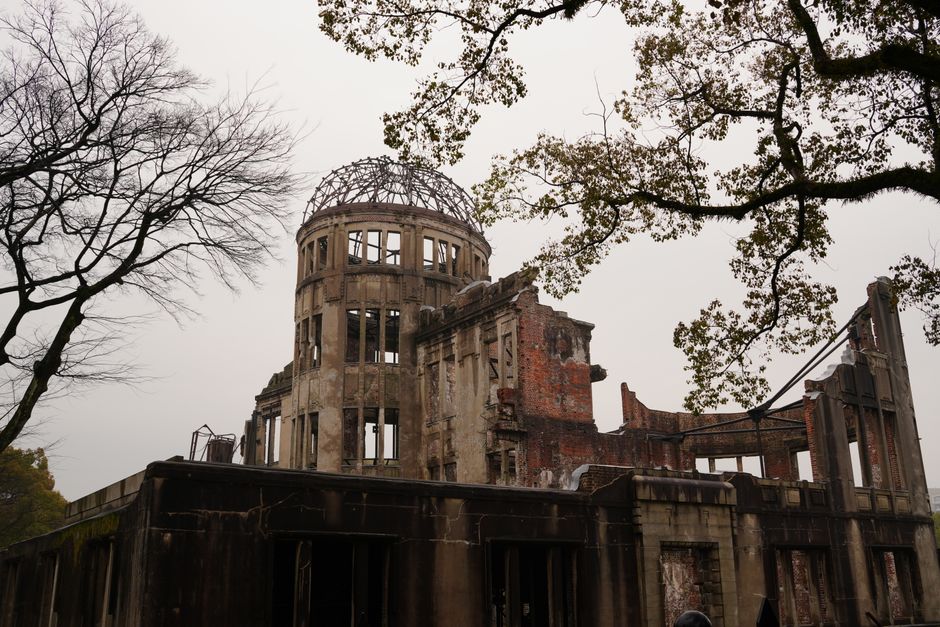
Policy decisions made during the Manhattan Project era shaped international relations for decades. The use of atomic bombs at Hiroshima and Nagasaki prompted debates over arms control that continue today (United Nations). Declassified records help historians trace how these decisions were made under pressure.
The societal impact includes changes in public attitudes toward science and government secrecy. The project’s legacy is reflected in ongoing discussions about balancing national security with transparency and ethical responsibility.
Table: Principal Individuals Identified in Declassified Memos
| Name | Role | Major Achievements |
|---|---|---|
| J. Robert Oppenheimer | Scientific Director | Led weapon design; managed scientific teams; debated ethical issues |
| General Leslie Groves | Military Director | Oversaw project logistics; enforced security; coordinated sites |
| Niels Bohr | Scientific Advisor | Brought expertise on nuclear fission; advised on international cooperation |
| Enrico Fermi | Physicist | Pioneered reactor development; contributed to plutonium production methods |
| Klaus Fuchs | Theoretical Physicist (later revealed as spy) | Worked on bomb design; passed information to Soviet Union |
Ongoing Research and Public Access to Declassified Materials
The release of declassified Manhattan Project documents has enabled researchers to reconstruct events with greater accuracy. Archives such as the U.S. Department of Energy’s OpenNet database provide access to thousands of pages of memos, reports, and correspondence (OpenNet Energy.gov). These resources are valuable for historians, educators, and anyone interested in learning more about this pivotal period.
Academic studies continue to analyze these materials for new insights into project management, scientific collaboration, and decision-making under uncertainty. Public interest has led to exhibitions at museums and educational programs that use original documents to engage audiences.
Declassified memos reveal a narrative that extends past technical milestones and tactical planning. It reveals the complex interplay between science, ethics, leadership, and security that defined the Manhattan Project era. As more records become available, our understanding of this historic effort will continue to grow, offering lessons that remain relevant for science policy and international relations today.