You’ve probably felt it yourself: moving money, borrowing it, or even saving a little should be simple in 2026. For a growing share of the world, it finally is and fintech startups have a lot to do with that. By rebuilding the financial toolbox around smartphones, open APIs, and real-time data, they’re lowering fees, shortening wait times, and inviting people who were locked out of the old system to take a seat at the table. Think of it like switching from a maze of bank branches and forms to a map app that gets you there in two taps.
The access gap and how fintechs are closing it
Even today, hundreds of millions of adults live without a formal bank account, and many more are “underbanked,” relying on expensive alternatives to cover everyday needs. Global household surveys compiled by the World Bank show that while the share of adults with an account has climbed dramatically over the last decade, gaps persist by income, gender, and geography. In the United States, the FDIC has reported millions of unbanked households and far more that are underbanked, people who still use services like check cashers because mainstream options don’t fully work for them. In many low- and middle-income countries, cash and informal credit remain the default because traditional banks are too far, too slow, or too costly.
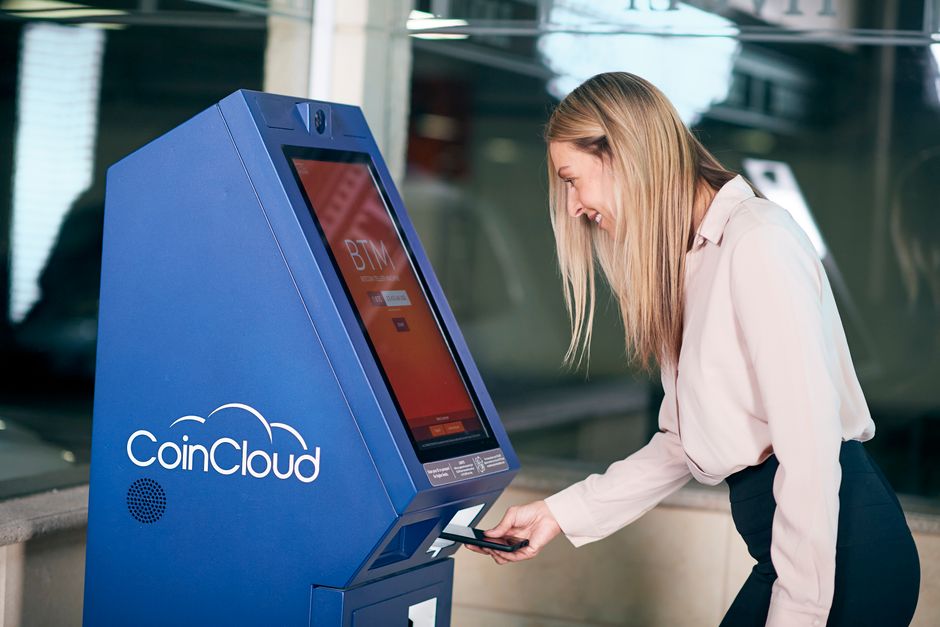
Fintechs attack those frictions head-on. A few patterns come up again and again:
- Distribution via phones, not branches. If you can verify identity remotely and move money in real time, you can serve a village as easily as a downtown core.
- Data as a substitute for collateral. Transaction histories, payroll data, gig-platform earnings, and utility payments can power responsible credit models for people with “thin files.”
- Interoperability as a public utility. When rails are open and instant, competition shifts to the quality and price of services on top.
Consider India’s UPI and Brazil’s Pix, both built as public rails but supercharged by private fintechs that make them usable for everyone. The Reserve Bank of India’s UPI processed tens of billions of transactions in 2023 alone, with month-after-month double-digit billions at near-zero cost to consumers; that ubiquity has allowed app-based startups to add lending, insurance, and investments on top. Brazil’s Pix, launched by the central bank, reached the majority of the adult population within a few years; it’s now routine for street vendors and small shops to print a QR code and accept instant payments, which fintechs integrate into budgeting tools and working capital products. Public statistics shared by the Reserve Bank of India and the Banco Central do Brasil illustrate the scale and speed of these shifts.
On the African continent, mobile money took root even earlier. Services like M-Pesa transformed how people store value and pay each other using basic phones. Industry reporting from the GSMA shows mobile money accounts in the hundreds of millions and annual transaction values in the trillions of dollars. That base infrastructure gives fintech startups a springboard to layer on credit, savings groups, and micro-insurance, tools that match the rhythm of irregular incomes.
The new toolbox: payments, credit, savings, and cross-border flows
Let’s break down what’s different, category by category, and why it matters in everyday life.
- Payments that move like text messages. Real-time push payments let a parent send lunch money instantly or a shop pay a supplier without float. In India, UPI lets you pay by scanning a code or entering a virtual address, no card network required. In Brazil, Pix settles around the clock, so freelancers can get paid on a Friday night with funds available immediately. Fintech apps wrap these rails with slick interfaces, smart reminders, and spending insights.
- Accounts that “feel” richer than a debit card. Neobanks like Nubank in Latin America or Revolut in Europe offer fee-light accounts, analytics, and multi-currency features. Nubank has reported tens of millions of customers, a sign that user-friendly design and lower fees can pry people away from legacy banks. Publications tracking these firms, including company reports often cited by outlets like the Financial Times, highlight how scale plus prudent underwriting can turn a consumer app into a mainstream bank alternative.
- Credit built on alternative data. Many fintech lenders analyze cash-flow data rather than just bureau scores. A rideshare driver’s daily revenue or a shop’s POS sales can justify a flexible credit line. The Bank for International Settlements and academic research have documented both the promise and pitfalls: alternative data can widen access when used carefully, but it can also encode bias if not validated and audited.
- Smarter savings and “autopilots.” Round-ups on purchases, nudges to auto-move money on payday, and goal-based envelopes can raise effective savings rates. Behavioral nudges supported by research in journals and policy reports, often summarized by think tanks and consultancies like McKinsey, show that well-timed prompts and friction-light defaults measurably change outcomes. Fintechs turn those insights into features you barely notice but that compound over time.
- Cheaper remittances and borderless accounts. Sending $200 across borders can still cost more than it should. The World Bank tracks average remittance fees that often hover well above the UN’s target of 3%. Startups using networked liquidity, local settlement, and compliance automation are chipping away at those costs and delivering minutes, not days. Some also provide multi-currency accounts so migrants can hold and convert funds when rates are favorable.
When you knit these capabilities together, everyday pain points disappear. A food vendor can accept instant payments, see cash flow in a dashboard, and unlock a small working-capital advance calibrated to daily sales. A recent graduate can split bills, build credit with on-time rent reporting, and save for an emergency with automated micro-deposits, all from one app.
| Problem | Fintech approach | Example | Indicative source |
|---|---|---|---|
| High payment fees and delays | Instant, account-to-account rails | UPI in India; Pix in Brazil | RBI, BCB |
| Unbanked/underbanked households | Mobile-first, low-fee accounts | Nubank, Revolut | Financial Times |
| Thin-file borrowers | Cash-flow underwriting | SME POS lenders, gig-income loans | BIS |
| Costly remittances | Local settlement and smart routing | Wallet-to-wallet transfers | World Bank |
| Cash-only ecosystems | USSD and wallet-based money | M-Pesa, mobile money | GSMA |
The trade-offs: safety, fairness, and the rules of the road
Progress doesn’t erase risk. If anything, scale raises the bar. Three themes deserve your attention whenever you try a new fintech service.
- Consumer protection has to travel with innovation. Buy-now-pay-later made checkout financing more accessible; it also made it easier to juggle multiple loans across apps. Regulators and researchers, among them central banks and consumer bureaus frequently referenced by the Financial Times and the BIS, have flagged the need for clear disclosures, affordability checks, and standardized reporting so customers see the full picture.
- Data rights are the foundation. Open banking rules in markets like the UK, EU, and parts of Latin America let you permission your own financial data to trusted apps. That’s powerful and it requires robust consent flows, encryption, and liability rules. The best fintechs practice data minimization (collect only what’s needed), plain-language disclosures, and layered security. Government frameworks and industry groups provide guidance; the McKinsey library has synthesized many early lessons from deployments worldwide.
- Algorithms need guardrails. Credit and fraud models can drift or embed bias if not monitored. Reputable providers run outcome testing, use explainable features where possible, and maintain human review for edge cases. White papers and supervisory speeches from the BIS capture best practices emerging across jurisdictions.
Sound policy plays a quiet starring role. Sandboxes and tiered licensing have helped startups launch responsibly in countries from the UK to Singapore. Instant-payment mandates, like those behind UPI and Pix, changed the economics of small-value transactions. And cross-border coordination (from AML standards to data-transfer rules) determines how smoothly money can move for migrants and small exporters.
Where it’s heading next
Momentum is shifting from standalone apps to invisible, “embedded” finance in the background of everyday services. Here’s what to watch in the next wave.
- Embedded finance as default. A marketplace advances funds to its sellers before a holiday rush; a ride-hailing app offers a driver a low-cost rainy-day fund; a shipping platform prices parcel insurance per trip. None of these feel like banking, but all rely on regulated rails and underwriting supplied by fintech infrastructure providers. Research boutiques and consultancies, including McKinsey, have quantified the revenue shift from traditional financial institutions to platforms that own the customer moment.
- Open finance beyond payments. Open banking is expanding into pensions, investments, and utilities data in several regions. With customer permission, a budgeting app might soon see your energy bills and suggest ways to cut costs or time payments to cash flow. Governments and industry bodies documented by outlets like the Financial Times are sketching standards for these broader data sets.
- Real-time rails go global. Dozens of countries now operate or are launching instant-payment systems. The more these rails interconnect, the closer we get to cross-border transfers that feel domestic. The BIS has piloted multi-jurisdiction experiments showing that message standards and shared directories can shrink settlement times dramatically while keeping compliance intact.
- Digital currencies and tokenized deposits, cautiously. Central banks in many countries are experimenting with retail or wholesale CBDCs, while commercial banks test tokenized deposits to settle transactions faster and with richer data. The Atlantic Council maintains a public tracker of CBDC experiments worldwide, underscoring just how widespread the interest has become.
- AI that minds the guardrails. Behind the scenes, models are scoring risk, preventing fraud, and automating compliance checks in real time. The challenge isn’t building models, it’s deploying them responsibly. Supervisory speeches and technical notes compiled by the BIS and other standard setters offer a blueprint: keep humans in the loop, test for drift, log decisions, and make explanations meaningful to customers.
How to choose fintech services that truly help
Shiny features can distract from the basics. A short checklist keeps you grounded.
- Match the job-to-be-done. Are you trying to lower fees, get paid faster, build credit, or automate savings? Pick the tool that solves your specific problem rather than the one with the most tabs.
- Scan the pricing model. Look for clear fee tables. For credit, compare APRs across providers, not