A charge from a store you recognize isn’t necessarily a charge you owe. It might be a duplicate, a canceled subscription, or a purchase that never arrived. But those problems call for a different response than a charge made by someone who got hold of your card number.
That distinction matters when you contact your card issuer. A credit card chargeback is a reversal the issuer may pursue after you dispute a transaction. If someone used your account without permission, report suspected fraud promptly so the issuer can protect the account. If you made the purchase but something went wrong, explain the merchant problem and submit records that show exactly what happened.
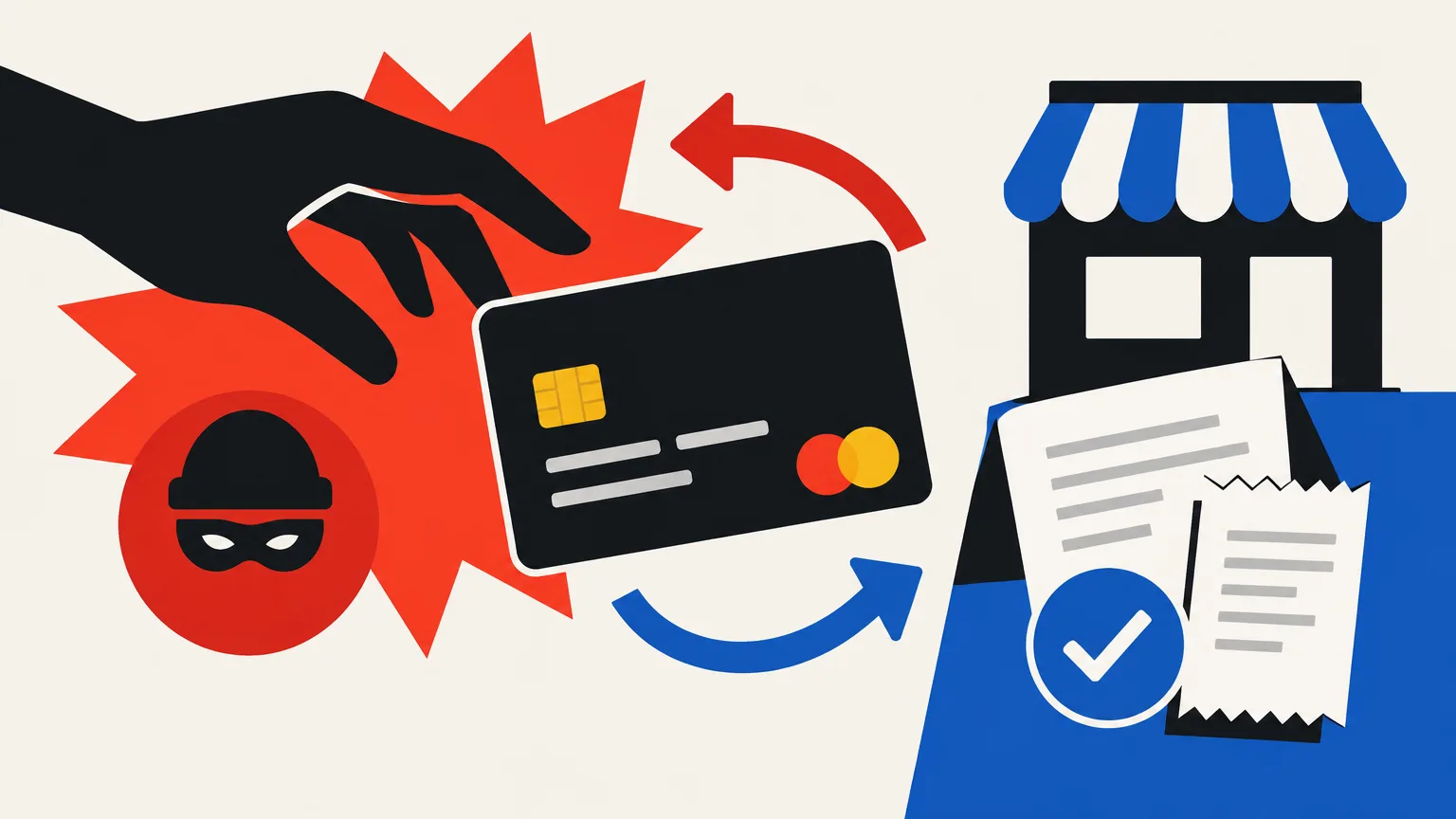
First, decide: fraud or a problem with your purchase?
An unauthorized transaction is one made by someone who had no right to use your card. Before reporting a charge as fraud, check the transaction details, your receipts, and any other authorized users on the account. Merchants sometimes appear under an unfamiliar billing name. A charge you made for a canceled subscription, or an order you placed but never received, belongs in a merchant dispute—not a fraud report.
If the charge still appears unauthorized, contact your issuer immediately, using the number on the card or in your account. Tell the issuer if the card is missing or if you still have it but suspect the number was stolen. Ask how it will secure the account, whether you need a replacement card, and how to report any other unfamiliar charges. Don’t wait for a pending charge to post before alerting the issuer to suspected fraud.
Federal law limits liability for unauthorized use of a lost or stolen credit card to $50 before it is reported; many card agreements provide greater protection. If only your account number was stolen and used, you generally have no liability. Those protections are a reason to report promptly, not a reason to leave an exposed account open.
Be accurate about permission. If you gave someone your card to use, a purchase outside the limits you intended may still count as authorized use until you tell the issuer that person no longer has permission. And if you made the purchase yourself, don’t label it fraud just because the seller won’t give you a refund.
Which purchase problems can you dispute?
A billing dispute is appropriate when the charge or statement is wrong. Common examples include a duplicate charge, an amount that differs from your receipt, a promised credit that hasn’t appeared, or goods or services that weren’t delivered as agreed. A charge for an order you refused because it did not match what you bought can also qualify. The federal billing-error rules distinguish those problems from a complaint about the quality of something you accepted.
That last distinction is easy to miss. Suppose you ordered a blue chair and the seller delivered a red one. Your claim that the item was not delivered as agreed is different from receiving the blue chair, keeping it, and later deciding its construction is poor. The second problem may still give you rights, but it does not automatically fit the federal billing-error process.
For a purchase problem, contact the merchant when a direct correction is practical. Ask for the specific fix you want: a refund, a replacement, or removal of an extra charge. Save the response. A merchant may resolve a simple duplicate charge faster than an issuer investigation. But you do not have to contact the merchant before sending a billing-error notice for goods or services not accepted or delivered as agreed, and you should never let merchant negotiations consume your dispute deadline.
A quality complaint follows a separate route. Under certain conditions, you can assert against the card issuer a claim you have against the seller and withhold the unpaid portion of the purchase. Generally, you must first try in good faith to resolve the issue with the seller; the credit used for the purchase must exceed $50; and the transaction must have occurred in your home state or within 100 miles of your designated address. Exceptions apply to some purchases, including certain transactions where the seller and issuer are connected. Because this right depends on an amount still owed and on the underlying claim against the seller, a chargeback is not a guaranteed refund for a disappointing product.
Build a record that proves the specific error
Good chargeback evidence is not the largest stack of documents you can upload. It is a short, consistent account of the transaction backed by records that address the reason for your dispute. Save the statement showing the charge, then gather what applies:
- For a wrong amount or duplicate charge: the receipt or order confirmation, the statement showing both charges, and any merchant explanation.
- For an order that did not arrive: the order confirmation, promised delivery date, tracking information, and messages asking the seller to locate or refund it.
- For a canceled recurring charge: the cancellation confirmation, the terms or notice showing when cancellation took effect, and the later charge.
- For a return or missing refund: the return policy, return authorization, shipping or drop-off receipt, delivery confirmation, and any written refund promise.
- For an item not delivered as agreed: the original description, photos of what arrived, your notice to the seller, and its response.
Write down when you called or messaged the merchant, whom you spoke with, and what they offered. If the merchant promises a refund, note whether it has actually posted; a promise is not a credit. Send copies of supporting records, not originals, and keep a copy of everything you submit.
Focus on the difference between what was agreed and what happened. “The package never arrived by the agreed delivery date of May 10” is more useful than “The seller is unreliable.” If you dispute only part of a transaction, identify the amount and show how you calculated it.
File with the issuer before the deadline
For a federal billing-error dispute, your written notice must reach the issuer within 60 days after it sent the first statement showing the error. The clock starts with that statement, not the purchase date or the day you noticed the problem. Call or open a dispute in the issuer’s app promptly, but also follow the billing-rights instructions on your statement. Send a letter to the address for billing inquiries—not the payment address—unless your issuer’s billing-rights notice specifies an electronic method that satisfies the written-notice requirement. Keep proof of delivery.
Your notice should include your name, address, account number, the transaction date and amount, the amount in dispute, and why you believe it is a billing error. You do not need a long account of every conversation. For example:
I dispute the $240 charge from ABC Store dated April 8. I ordered two lamps, but the merchant delivered only one. I asked the merchant on April 15 to deliver the missing lamp or refund $120 and received no correction. Please investigate the $120 billing error. Copies of my order confirmation, delivery record, and messages are enclosed.
If a future delivery date falls after the 60-day window tied to the charge’s statement, don’t assume the deadline resets when the order fails to arrive. Some issuers may allow a later dispute for delayed shipments, but that is not the same as preserving the federal billing-error deadline. Contact the issuer, explain the agreed delivery date, and provide the records you have.
What happens while the issuer investigates?
After receiving a qualifying written billing-error notice, the issuer generally must acknowledge it within 30 days unless it resolves the matter sooner. It must complete the error-resolution process within two complete billing cycles, and no later than 90 days after receiving your notice. A temporary credit may appear during the investigation; treat it as temporary until the issuer confirms the outcome.
You can withhold the disputed amount and related charges while a billing error is being investigated, but you must pay the undisputed portion of your bill on time. The issuer cannot report you delinquent because you withheld the disputed amount during that process. If you normally pay your statement in full, review how the dispute affects the payment you make: protecting the grace period on your undisputed purchases still matters.
If the issuer finds an error, it must correct the account and remove charges related to that error. If it decides you owe all or part of the amount, it must explain why in writing and tell you what is due and when. You may request copies of the documents it relied on. Compare those records with your own before responding; a delivery record, for instance, may show an address different from the one on your order. If you still disagree, write back promptly to preserve your objection, and consider filing a complaint with the Consumer Financial Protection Bureau. A complaint does not replace sending a timely dispute notice to the issuer.
A strong dispute starts with the right classification, a clear explanation, and records that prove the disputed point. Report unauthorized use immediately. For a merchant charge, try to get the problem fixed without losing sight of the statement deadline.
Disclaimer
This article provides general information about U.S. consumer credit card disputes, not legal or financial advice for your specific circumstances.